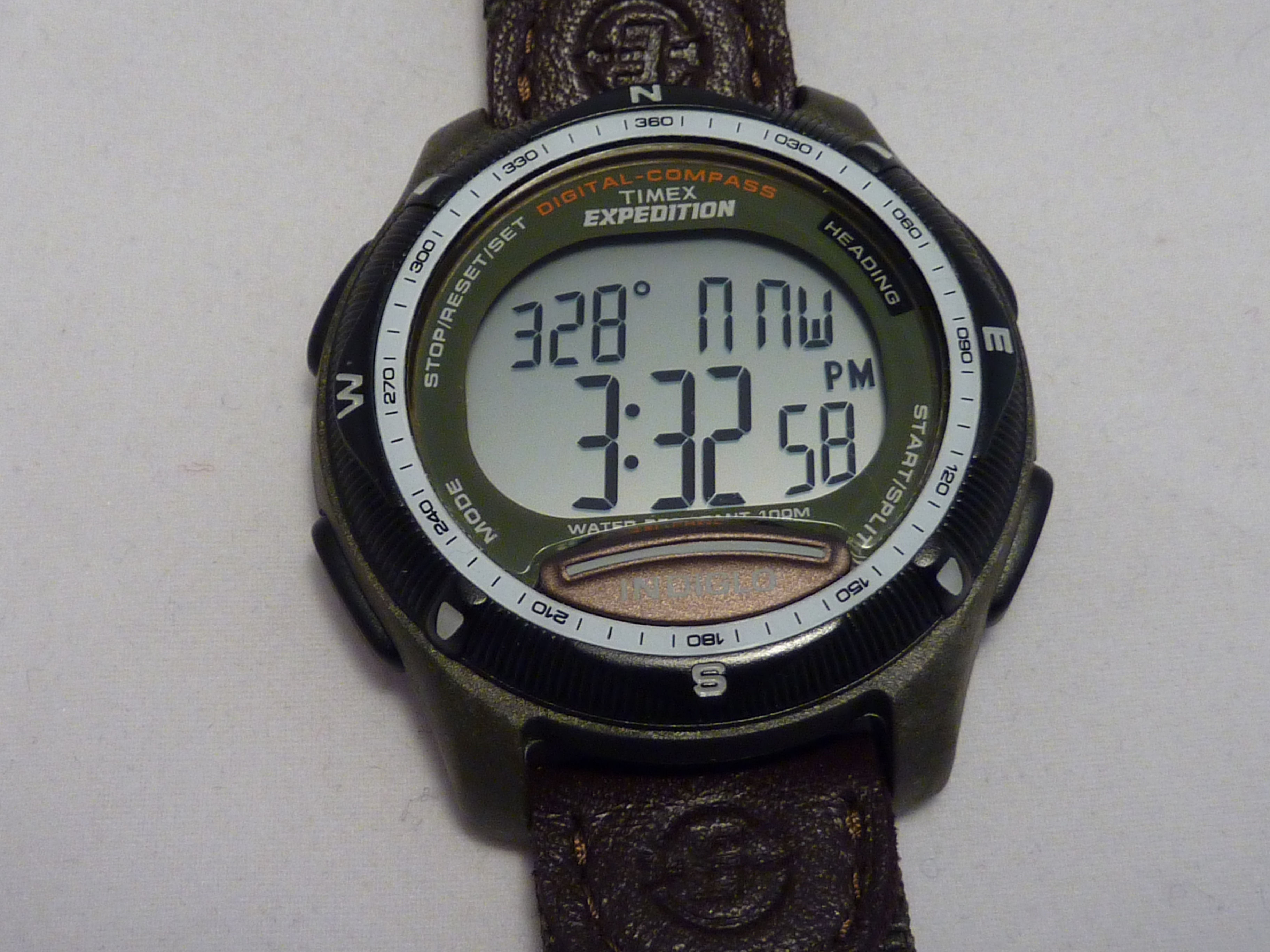
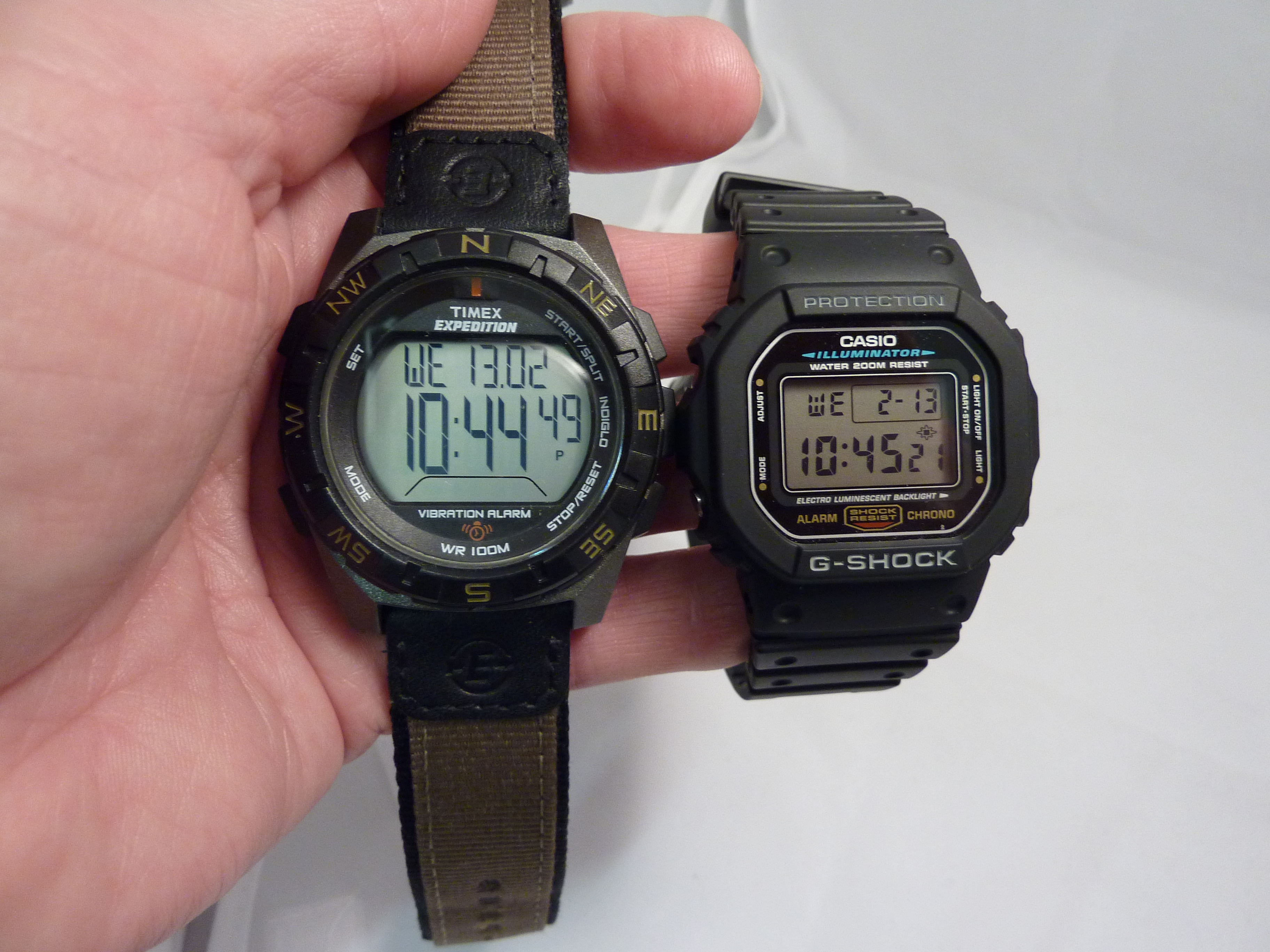
True elegance

Whilst over the years I’ve liked the multifunction models, it’s a fact that my favorite style is probably still the conventional “Dress” watch.  The one overriding word that says it all for me is “elegance” and my choice would always be for a slim cased model that can in turn show off a truly “elegance” with simplicity of dial and case, in fact an “ensemble” of complimentary features that simply work.  And I do not mean “minimalist” even thought this seems to be the modern way of expressing this, I tend to find those offerings both bland and unexciting, certainly not elegant.
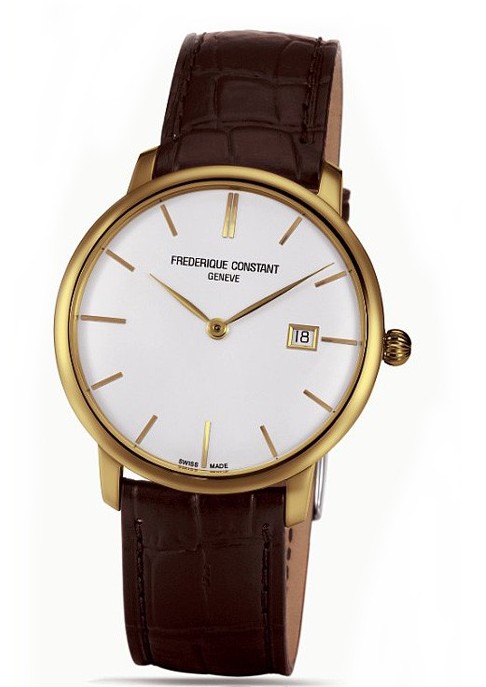
Frederique Constant Automatic Slim case

So having had a look round at the currently available slim and elegant models this is the first of a few that caught my eye.  The Frederique Constant of Geneve Automatic slim cased model above.  A nice sized 40mm diameter case at only 9mm thick, with a sapphire crystal, 30m Water Resistance, FC-306 25 jewel Automatic movement, in a Yellow Gold plated case.  I think this dial face though simple also has an elegance (note it is slightly bowed, not flat), nice gold applied stick hour markers, beautifully shaped gold hands and a neat sized date window @3.  The onion crown is a nice touch and perfectly sized and overall a classic dress watch I’d say and mid priced too for this class of watch.

As you can see for a dress function there is absolutely no need for an overly “busy” face with sub-dials and extraneous features.  It’s about elegance.

It’s also interesting to note that to find a Quartz watch that can be described as truly elegant is not easy.  I show the same maker here as an example – this is the Frederique Constant Quartz version of an almost but not quite similar model.
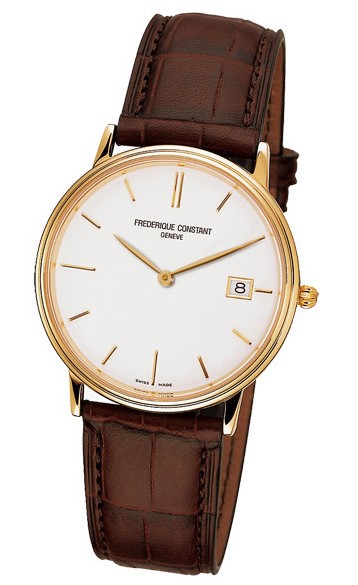
Frederique Constant Quartz slim Gents.

Now it looks fine of course, but that “elegance” of the previous version is, for me at any rate, just not there.  This model is slightly smaller at 37mm diameter and is actually thinner, being an ultra-thin 5mm with a sunray silver dial, stick hands, and sapphire crystal.  The case has that double stepped bezel top that for me doesn’t have the style of the first.  The gold hands are not “quite” as well shaped and the marker @3 is chopped almost in half, plus that “bowed” look to the dial just isn’t the same.  All that said of course, it is still a very nice watch (and perhaps the image does it an injustice) but the first one is my personal and more expensive choice (£1750 to £750 for the quartz).
However an interesting point about models without seconds hands, is that it’s not easy to see at a glance if the watch is mechanical or quartz.  So if you are with friends that are mechanical nuts, then you might just get away with it. 😉

Rotary Originals Quartz

Another quartz offering is this model from The Originals collection from Rotary – and not a bad looking watch it is too.  PVD Gold plated case is very slim at 5.7mm and a diameter of 43mm including crown and a nicely patterned champagne dial face plus neat contrasting black stick hands and printed numerals.  Crystal is Sapphirite (a sapphire coated mineral glass).  Simple case design with the “bar” lugs from another age and a quality leather strap.  A pretty good dress watch and at a low/mid price of around £150 – £220.  I understand the “Originals” series feature Swiss Quartz movements.  Overall it seems a pretty decent dress watch for the money.

For me the above Rotary whilst a nice dress watch loses out on the elegance stakes for various reasons.  The black stick hands in this context are just that, pointers, and the printed numeral here are rather bland.  The whole comes across as more plain than elegant, though in reality as opposed to the image, it does look a class watch.  At the price of course it has to be worth a look.

Stuhrling Original Ascot Quartz

Another stick hands dress watch comes from the Stuhrling stable.  The Stuhrling Original Ascot Quartz, which is an even lower priced model than the Rotary at around £56.00.  This is 38mm diameter and only 5,5mm depth, so is a very thin watch indeed, with a Krysterna Crystal, white face, printed hour batons, 10M Water Resistance and a Swiss movement, represents very good value.  However in looks it comes across as just simple or even minimalist and with no hint of any elegance at all, so falls short as a dress watch for me personally.  Nice enough watch, but not for me.

Skagen UltraSlim 858xlgld

I mentioned minimalist at the start and this is such a model.  The Skagen 858xlgld – whilst a dress watch I suppose it has this Danish design minimal look which frankly does absolutely nothing for me.  Flat gold hands are positively inelegant and the flat featureless dial and printed hour batons just add to that barren look.  The case at 39mm diameter and only 5mm depth is fine, but I find this a non starter in the elegance stakes, though for a cheap dress watch at £50 – can’t be bad.

Dugena Classic
Dugena Classic

This watch from Dugena Classic range is a better affair than the above and even though it has stick hands, it does have a certain elegance about it overall.  It has a two tiered dial face and applied gold numeral batons, nicely shaped gold case at 38mm diameter and just 6mm depth, so is slim too.  Mineral glass crystal.  It also has a very good quality quartz movement of Swiss/German origin and a price point well below it’s quality (around £70.00).  An excellent dress watch and with a touch of elegance perhaps.
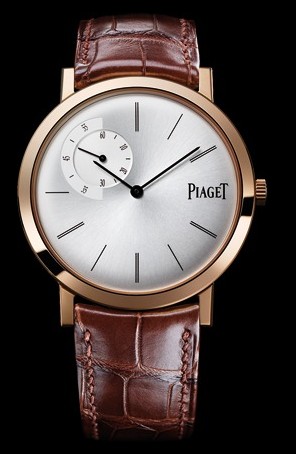
Piaget Alto Plano
Piaget Alto Plano

Well here’s a watch that’s close to home for me as I actually own two of this maker.  One vintage and one modern.  And now we have to be talking elegance.  This is the Piaget Alto Plano ultra slim model (current) and although this model has a sub dial for seconds @10 (mine is at@4) it is one of the few dress watches with a seconds feature that looks both different and yet retains a certain elegance too.  Stick hands here don’t look wrong in this setting and neither do the printed baton markers.  They blend together very well indeed as I mentioned at the start – the “ensemble” or combination of elements is superb.  Again you have, as the Frederique Constant Auto mode,l this slightly bowed dial face that just looks right. This particular model is 38mm diameter and just 4.1mm depth is incredibly thin, an 18ct pink gold and subtly shaped elegant case (even the automatic is only 5.25mm depth), though as you can guess this is not a cheap model but pretty expensive at around $13,00o.  You better believe it, this sort of elegance costs!

Of course there are many, many more dress style watches out there and if I look long enough I’d probably find quite a few more, that would suit my own particular requirements and opinion.  But suffice to say, there are literally dozens around.  And this is very encouraging, especially in this modern day obsession for big, sometimes clumsy, over featured, extravagant models that seem to proliferate now.  The fact that the “classic” dress watch is still available, says to me that with a bit of luck others may enjoy the feeling of wearing such wonderful watches, well into the future – and that has to be good.

But a word of caution – I’ve found over the years and confirmed it yet again – that true elegance = expensive!

Isn’t that the way of it . .

//

Not another Compass!

You may recall I got myself a Timex Digital Compass model T467619 recently, which I like immensely by the way and the only negative thing on it, if being very picky, is the fact that it has a bespoke strap.  And you may also know from my posts that this is a feature that always niggles me.  Why they can’t simply have a conventional strap and spring lugs I do not know, because after a few years use when the strap goes and the problems of trying to get that particular strap or bracelet can be difficult and expensive too.

However recently I managed to find within Timex’s enormous product range, another Digital Compass model, which this time has a simple, conventional strap fixing to lug spring bars.  The T42761

Timex Digital Compass on strap - T41261
Timex Digital Compass on strap – T41261

This and the previous T42761 are a sensible size (I wish Digital Compass models from Casio and others would take note) and also light weight, both being a resin material.  This one is the neatest at 43mm diameter and 12.4mm depth against the other at B 45mm x 13.6mm.

The T42761 (rt)  Digital Compass smaller and lighter than T42761 (left)
The T42761 (right A) Digital Compass smaller and lighter than T42761 (left B)

Both have large digital displays when compared to the case size AND they are super easy to read, though slightly different.  The left one has fractionally thicker digital & taller numbers in comparison to the other, though both are perfectly fine to read.  The digital operation of functions is similar, though the left model scores here for UK users as it can alter the Date/Day to Day/Date – whereas this new one cannot.

Compass reads headings and bearings of 12 o'clock position.
Compass reads headings and bearings of 12 o’clock position.

The largest difference function wise is in the Digital Compass operation.

My previous model indicates North and South with small block markers which appear just outside that outer black dial ring AND gives the Heading and Bearing of the 12 o’clock position.  It also display the data for 20 seconds.

My new purchase does not indicate North or South, indicating only the Heading and Bearing of the 12 o’clock position and only displays this for 10 seconds – I find this quite short to fully take in what I’m seeing, though you can of course just press the button again.

Note that the T42761 (my new one) has 4 side case buttons, the Indiglo button being on the top of the case @6.  I also note that the other model allows you to have a + and – adjustment when setting, whereas the new one only has a + setting (the button @4 o’clock).  However the numbers change very rapidly so not much of an issue.  They are both very easy to use.

On the wrist - a sensible size and WITH a compass!
On the wrist – a sensible size and WITH a compass!

The final difference is of course the strap arrangement, the new one having the conventional strap.  It means easy replacement if it breaks, wears or just happens you don’t like it – you can fit your choice of strap.  You can also sit the watch flat on a table or in a display box, but you can also sit it upright on the lugs @6 and use it as an alarm clock on a bedside table for example.  And that’s quite useful if you don’t wear the watch at night and you can’t do that with my previous model.

I also find that this new one feels cheaper and although lighter in weight at 47g against 50g, it’s not because of that, but just a feeling there’s maybe a quality change.  No real evidence for this as both watches are very, very good, and I do realize this is all very personal and maybe overly picky.  But that’s what makes us buy different models and versions I suppose – what suits you may not suit me.

Now I have them both – which one do I like best?
Difficult to say, though I do prefer the fact my previous one indicated North/South + bearings etc. and that it can adjust to display Day then Date.  Of course I like the strap on the latest one, but that’s the only plus actually and even that has it’s limitations as an issue.

My solution?

I bought a spare Timex strap for it – today!  🙂

A trio of Timex - and I like them all!
A trio of Timex – and I like them all!

This an image of my three new Timex models from largest to smallest –  Vibration chrono (center), Compass 1 (left) and latest compass 2 (right)  And I like them all!

Military fashion?

If you’ve ever trawled through the so called Military watches around today, it’s quite amazing the weird, wonderful, often silly but sometimes really quite innovative designs that crop up from time to time.  It’s fertile ground for all sorts of wonderful designs good and bad and quite often it’s the lesser known manufacturers that come up with maybe the most innovative ones.  There are however a few models around that are worthy of a second look.

Humvee recon Olive Digital

Not the first to use the name, this one is actually from the named folks themselves – the Humvee Recon – in Olive.

Been around for a few years though this is the first time I’ve come across it myself.  And it certainly looks the part with its rugged shock proof stainless steel case with added rubber protection, oversize digital display and very tough looking 28.23mm nylon fabric fast-wrap strap. The Olive Green and black combination always a winner when thinking military and I understand it also comes in a dark slate color too.
Four push buttons control the functions and setting etc on the side of the case, though there is no protection against accidental use, so difficult to say how they’ll be, unless tried out on the wrist for a time.

Specification wise it’s also not at all bad with Time, Date, Countdown Timer, 3 x Alarms and a Stopwatch with a 20 lap recorder.  If that wasn’t enough it also has a 22 city World Timer for good measure (with DST option).  A 50m Water resistance and according to the spec it has a “scratch resistant” face, but I don’t think this means it has a Sapphire Crystal or it would say so categorically.
The large display is divided in to 3 sections to give separation of the data shown and the LCD uses a matrix layout with black figures contrasting against the grey dial background.

Dimensions are – Case width: 38.44mm, Case Depth: 14.55mm.  Weight is just 60 gms.
The lug to lug dimension is not quoted but it actually looks rather big at around 65mm maybe, which is very substantial, especially for smaller wrists.  Could well be it’s downfall for me personally, but until I see it on my wrist, difficult to say.

With very strong competition in this sector, the Humvee is sensibly priced it and it’s also being offered at discounted prices here and there, so maybe it’s worth more than a look.

But that top to bottom size being so large could be the killer, certainly as far as I am concerned.

Note –

Since finding this model I’ve discovered that there are a few other Humvee models around such as the Zulu range, which are conventional analogue dial military style watches which appear very much like the true Military Specification watches.  They feature Tritium light technology for perfect vision in the dark and seem very well priced.  They feature Japanese Miyota 2035 quartz movements and 100m Water Resistance.
I’ve also seen an analogue Field series which feature day and date windows and the more conventional luminous coatings for night use.

A quick search on Google will certainly flag these up if anyone’s interested.  You will also find the Timex Humvee which is something else again!

Fossil Machine

This week I’m wearing an unusual model from Fossil – the Black Fossil Machine Chronograph Alarm FS4682.  And no it’s not a military watch though it does look like one, as it has that black dark stealthy look about it that says it’s maybe not a dress watch – or is it?  The feature that attracted me was actually the Analogue/Digital display, which for those regular readers should know by now is a format that I particularly like.

Fossil Machine Black Alarm FS4682 Ana/Digi Watch

It’s one of those watches that draws comment if seen by friends and I have to admit I like wearing it.

One of the unusual and fascinating aspects of this model is it’s large digital display, which features a “permanent” green luminescent Matrix display in addition to analogue hands.  The display actually reminds me of my Breitling Aerospace in that it has a luminescence that tends to pick up or reflect any ambient light and is visible in most day situations.

45mm diameter but only 13mm depth - means a neat fit.
45mm diameter but only 13mm depth – means a neat fit.

I had some concerns at the time that 45 mm diameter could be too large for me, but owing to it’s relatively small depth at 13mm, it actually fits my 170mm wrist very well indeed.  It sits flat against the wrist and easily slips under a shirt cuff and it’s very comfortable with the extremely flexible rubber strap and flush fitting black stainless buckle.  The case is black Ion Plated solid Stainless Steel with a wide matte black heavily knurled bezel and a flat non-reflective crystal.  The black case body (only noticeable at the sides) has a gentle gloss though the lugs are a brushed matte finish.

Military look Fossil

I already mentioned the strap and whilst it looks like “steel bracelet links” it’s actually made of black rubber, the inner surface of which, against the wrist, is actually smooth and very comfortable with a conventional buckle which is rather neatly figured.  It has a full screw back in mirror finish stainless steel with the Fossil logo, model number and a quoted Water Resistance of 5 atm or 50m.
On each side of the case are 4 x black textured push buttons that operate the digital functions and a large knurled center crown adjusts the analogue hands.  Interesting to note the buttons are set slightly straight compared to the case shape and as a consequence are much easier to operate than most.

Fossil with flexible rubber strap & black IP steel case
Fossil with flexible rubber strap & black IP solid steel case

The watch face features conventional analogue hour and minute hands, which are quoted I recall by Fossil as “hi visibility” orange tipped and an orange center seconds hand.  Now whilst these do show very well against the matte dial black background in good light, they are not quite so good in low light.  The hour baton markers are silver colored.
Personally I would have preferred a white color for both the hour and minute hands and hour markers – from my experience so far, it would be clearer, certainly in low light.  Note there are no luminous features on this watch at all – though this is not uncommon on ana/digi models.

The large digital Matrix display shows Hours, Minutes, Seconds, Day and Date and as independent of the analogue settings can be used as a 2nd Time zone if preferred.  The display normally shows a slight luminescent green color and is quite clear to read in most daylight situations.  It can also be back lit (EL) using the top left button B and changes to a blue color (see image below) for a few seconds for low light and night time use.

EL Back- light turns green to blue - quite effective for night use.
EL Back- light turns green to blue – quite effective for night use.

For me I might prefer it to be just a little brighter, but I wear glasses and am getting older – so perhaps this is more my problem!

The standard digital functions on this model are scrolled through using button A (lower left) and in order of – Time/Day/Date, Alarm and Stopwatch, then Time/calendar setting.

As the Date seems to set correctly for odd months it obviously is an auto-calendar, though I don’t know the final date (perhaps 2099?).  There is also a PM indicator on 12 hour format, but using button C (upper right) you can toggle either 12/24 hour time.

The Alarm function can be set for Alarm, Chime or both.  The alarm sounds a double beep, though as these days I can’t hear it so good, same for the hourly Chime, so I have to leave opinion to others – My wife always hears it!
The stopwatch has standard functions with stop/split (you can measure multiple split times) and reset, works great.  This is is a digital stopwatch only – the hands are not involved.

As said when in normal Time/Day/Date view the button A (lower left) scrolls in sequence to Alarm and Stopwatch, then continues to Time setting and the Seconds flash.  The setting sequence is Seconds, Hour, Minute, Month, Date and weekday.  If you adjust with button C (upper right) it then progresses to Hours and so on – pretty normal stuff.  It’s quite logical and reasonably intuitive once you’ve tried it a few times.  I would note that the standard Instruction booklet that’s included does NOT actually cover this model, so there are no Digital settings instructions.  You have to download a supplementary set for it – called Ana-Digi QFL133SB.  I provide a link HERE.

This trend for NOT including specific model instructions with the watch I find quite annoying as not everyone has internet access.

Overall though this is a really smart looking watch with a surprisingly good digital display in reasonable light.  It’s slim enough to fit most wrist sizes and very OK as a dress watch.  If you like the “military” look then it’s OK for that too, with the IP black stainless steel case and black rubber strap (note- the strap is 24mm wide with quick release bars at lugs).  The build quality too is pretty good, dial, hands and case and the Matrix display a bit of a revelation and it’s available at a reasonable cost.

Any downsides? –

Well for me maybe the loss of analog clarity in low light which could be better.  Also the lack of a model specific instructions with the watch is disappointing.  Also note this model has 3 batteries! and it would be useful to have instructions as to which powers what, to enable changing when required.

Overall: – an excellent watch for the money and I’m very pleased with it.

I’m not too familiar with the Fossil name, though not just a fashion company it seems.  They have quite a history of watch acquisition and now manufacture in their own right apparently.  They both import and manufacture in Switzerland and China and distribute in USA, Germany and Asia.  In 2012 they bought the well known company Skagen and in 2013 started an upscale Swiss range – Fossil Twist which they both design and make.  Some other brands are associated with them such as Adidas.

How to display, two different ways.

My last image shows it with the Timex Expedition just as a comparison.  Two totally different displays, yet both looking good.

Note – You can see a range of Fossil watches available in the UK HERE
Note 2  This model comes with 3 batteries.  As shown in the image – the 1st (recessed) is for the analog time, the 2nd (bottom) is the Digital movement and the 3rd to the left is for the EL back light. Remember the analog and digital are independent of each other (hence the Dual Time function).
Note 3
 – This model comes with a standard 2 years Warranty.  However more importantly there is also a Lifetime (limited) Warranty on the movement, hands and dial and if sent for repairs here in the UK, Fossil will require a copy of the proof of purchase or stamped and dated warranty.

Addendum – unfortunately the Ana/Digi model FS4682 is no longer available, which is a pity as it is one of the best Fossil models I’ve come across in a long time.

Ref. SO 050815

A Classic but is it for me?

Well this is about as far as I go on my search around the Digital watch models, as the one I’ve found is said to be the the best of the best.  In fact I’m told this is THE modern Classic – the Casio G-Shock DW-5600E-1V model with the 3229 module.

Casio G-Shock DW5600E Module 3229
Casio G-Shock DW5600E-1V Module 3229

Arguably the best designed Digital Watch of it’s time, this particular design first appeared in 1996.  This DW5600E version is also about as simple as a G-Shock can be and inside has a set of “sensible” every day use functions and features.  Such as the commendable 200m water resistance, a multifunction Alarm, a Countdown Timer and a Stopwatch.  Note this one features Module 3229, which has the Auto-Calendar to 2099 (previously to 2039)

Other details are as follows –

The Countdown Timer can be set for any duration from one second up to 24 hours, in one-second increments; optional auto-repeat function.
The Stopwatch: 1/100th second, which measures net time, split time, and first – and second-place times; rolls over at 24 hours.
One Alarm but unusually in addition to the hour and minute, a month and/or date may optionally be set, so the alarm will only sound during the specified month or on the specified day of the month.  Actually a very useful reminder, if like me you forget the Dentist appointment.
There is also an Hourly Chime option.
Backlight is provided by the Illuminator, which is an Electroluminescent type, which shows blue/green to light the whole display at any time, though excels in low light situations or at night.
The Battery is a Lithium CR2016 and should last around 2 years in normal operation.
As a G-Shock it has the shock resistant design and in fact is intended to survive a 10-meter fall.  This DW5006E version has a Polymer composite-case and a flat steel back panel (4 screws) and is light weight in comparison with older models.  Because of the neat flat back, lower profile and relatively small dimensions, it also sits better on the wrist.
Water Resistance is an excellent 200m, so this model has no issues under water!

G-Shock - special strap means it can't sit upright.
G-Shock – special strap means it can’t sit upright. Note small smooth recessed pushers.

The DW5600 series has a classic shape with it’s square/rectangular 43.6mm wide case in tough black Polymer and matching flexible rubber strap.  Interestingly when you first strap it on, it suddenly dawns on you that it’s actually one tough watch, but amazingly comfortable.  It’s also rather compact for a Casio G-Shock – which HAS to be a good thing and for once suits me VERY well!  In fact the case depth is a neat 12.6 mm, so it wears nice and flat on the wrist and slips easily under a shirt cuff.

So no Solar power, no World Time, no Compass, Altimeter, Thermometer or Barometer here – but a classic WYSIWYG (What You See Is What You Get) kind of watch that is not only refreshing, but it’s also darned good.  A case of less is more, you could say.

Slim profile fits the smaller wrist.

A well protected mineral glass sits above a good contrast Casio digital display.  In normal or Timekeeping mode it shows the Time (Hours, Minutes & Seconds – in 12hr or 24hr format), the Date, Day and Month.  Note that the Date and Month are contained in a small outlined area of the display and when in Countdown Timer or Stopwatch modes, this area changes to and shows the current time – I think this is a really useful feature.  Not so clever for UK users is the fact that you can’t reverse the Date/Day format to Day/Date (we Brits like to know what Day it is first, rather than the Date – I mean who cares about the Date!).

The functions as with most digital watches are operated by the use of pushers or buttons on the sides of the case and here there are 4, two on the right and two on the left.  There is always a compromise with these as to protection, that is, to make sure they can be used easily and have protection from inadvertent use.  Usually this is done either with a recess in the case body and/or small shoulder lugs either side of the pusher.

But in this model it’s achieved by the case shaping and on this model the top left SET pusher is virtually flush with the case and is really difficult to operate easily.
This is doubly tricky as it’s the most difficult pusher to reach for a left wrist wearer who is right handed.  Also as each of the pushers are really rather small I already find it tricky to “find” the night light for example (bottom right) especially in the dark and end up fumbling around with my (small) fingers searching for it.  The case has many hollows and bumps so one recess or bump feels much like any other.  Another point is the pushers are small, round and smooth and for me I would prefer some texture on the surface.
As a consequence setting or selecting the functions is not as easy as I would like.  Also if I was being picky the sequence of operation of the functions is not as intuitive, for example, as a Timex.  An example would be in the setting of the time, where the right pushers don’t act as up and down buttons when setting figures, but only the the upper pusher is used and it only increases numbers – you can’t dial down the numbers.

However these niggles aside I still like this model – mostly as it has very few gimmicks and it can be worn on large or small wrists and it’s comfortable.  The Display has good contrast and is large enough to read easily (when on the wrist) and it shows a lot of information in one glance.  It has Timers that can be set in various options AND you can read the current time when using these.  It has beep Alarms and and the dial can flash at the same time when these are activated.  It’s very tough but at the same time it’s a sensible size.

As folks tell me, it’s a G-Shock Classic sure enough and design wise I agree with some but not all of the hype and for me there are reservations – and of course the question always has to be –

Does it work for me? 

Now bearing in mind that I have just acquired a Timex T49854J, it may be interesting to have a quick comparison here and now and decide, from a practical point of view, which one I personally prefer.

Case/body style – Timex wins – conventional strap means ease of replacement AND it allows the watch to sit off the wrist on a bedside cabinet for example, upright on it’s lugs.  The pushers are larger and very much easier to use and whilst they don’t have physical protection I have not yet had an accidental push.  The night light is very easy to find as it’s the largest pusher on the right center of the case, where the crown would normally be.

Casio v Timex - a personal choice.
Casio v Timex – a personal choice.

Display – Timex wins – the display is much larger and easily readable from a distance and even easier when upright. (the Casio has to sit on it’s side, so this fact and owing to the slightly recessed face, at 6 feet I can’t read it).

Functions – Timex wins – They both sport a similar range of functions, Multifunction Alarms, Chronograph, Countdown Timer, Hour chime etc. though the Timex does have some additional functions and options.  But basically the Timex is easier to use and more intuitive.  Pushers are larger, textured surfaces, easier to use and the setting procedures are both quicker and simpler to manage.  Also the Timex has the option to set DAY/DATE format for the UK users whereas the Casio doesn’t.  Also the upper and lower right pushers can alter the digits up and down, so setting times etc. is much quicker.  In short the Timex function program wise, is in my opinion more user intuitive than Casio.

Alarms – Timex wins (for me) – Though this is personal and purely as this Timex has a Vibration Alarm option.  It can have vibration and/or beeps and as I can’t hear the beeps any more – a Vibration Alarm wins every time.  It’s also useful when the watch is off the wrist and on a bedside cabinet.  Sitting upright on the case lugs (which the Casio can’t do) when the Alarm sounds it also vibrates against the surface it’s on (just like a cellphone) and is easily audible even for me.  On the wrist of course it’s fine as the vibrations are easily felt.

Nightlight – Illuminator v Indiglo.  Not much to choose between them – I would guess the Timex is slightly brighter and it’s larger of course, but both are good.

Water Resistance – Casio wins – but the winning is moot – 200m against 100m – let’s face it both are very good.

The practical choice - Timex T49854J Expedition, Vibration, Chronograph.
The practical choice – Timex T49854J Expedition, Vibration, Chronograph.

So all in all as a personal preference it has to be the Timex basically as I have no issues with it at all.  And this is rare I can tell you!  It IS a little thicker though unlikely I’d wear either watch in a dress situation.  After all the Timex is advertised as an Expedition watch, so fair comment.
The Timex just manages to suit my average wrist and it is the easiest by far to use practically, be it Functions, Pushers, Display, Alarm and that conventional standard fitting strap wins every time.

So whilst it’s the Timex for me by a short head, I have to say I like them both and I consider them great buys.

Low cost digital track?

Still been looking at Compass watches and whilst I have NOT really been interested in all digital ones, preferring analogue/digital, this inexpensive Digital Timex just happened to cross my path by chance, as a friend appeared on my doorstep the other day with his new purchase.  I was very impressed and surprised with it’s relatively small and compact size and just had to have a closer look.

This is the Timex expedition T427619J Compass Chronograph and not one I’d seen before, though I understand it is available in the UK.

Timex Expedition T42761 Digital Compass Chronograph.

What attracts me is FIRST – A familiar Timex light colored digital display, similar though not identical to the previous posted model (T49854 ) that appears to show excellent contrast again – so I should be able to read it and SECOND – the fact that this model sports a Digital Compass.  Timex use a compass sensor from Precision Navigation inc. who are leaders in the provision of compact magnetometers with high reliability and accuracy and affordable cost.

On first glance it has the typical “outdoor” Timex looks and appears well specified without being silly.  Size wise it is very promising indeed – though as with all these “outdoor” watches the size has to consider the buttons set into the sides of the case – in this instance the total diameter is 45mm including buttons and with a neat depth of only 13.5mm, this is one of the smallest Digital Compass watches I’ve yet seen (analogue or digital).  It has a bi-directional click-able bezel with compass heading markings on it, a 22mm leather calfskin strap with buckle (but unfortunately a bespoke fitting), a 330ft Water Resistance or 10ATM specification (swimming pool is OK, but not scuba-diving), Acrylic Glass and a digital display showing Day/Date Month, Time and seconds.  It also has 3 Alarm functions each optionally can set for Daily, Week Days or Weekends, optional Hour Chime, 100-hour Chronograph, 3 x Time Zones, 24-hour Count down Timer and “occasion” reminder alarms.  It even has a Customizable mode set where you can “hide” unwanted modes.   This model, after all that, is not over-functioned as it omits a Thermometer, Altitude or Barometer – in other words this is not a (T)ABC watch – but a C watch.  Don’t you just love the abbreviations!

It also has a tiny “bubble” level above 12, a useful touch when calibrating any 2 axis Digital Compass.  The more horizontal during calibration, the less errors you build in.  Whist it’s not the needle variety this compass uses the little block/dots system in common with other Digital Compass models including Casio, Barigo, Techtrail, Highlander and Pyle, so should be interesting to see how this one performs.  However bear in mind these in-watch magnetic field sensors at this price range do have limitations and can be affected by many factors, so don’t expect pinpoint accuracy.

In Compass mode display shows heading in degrees, at the 12 position. North shown with the single dot marker

Note – my photograph above does not show too clearly the virtual dot compass markers – one denotes the North and the trio only just visible above the South marker on the bezel (they are actually very clear).

Talking of accuracy the compass of course should be calibrated before you first use it to get the best out of it.  As usual you should try this in your location and away from influencing factors (beside your car for example) and if doing this at home keep it away from the computer and so on.  Same system and procedure as used by most of these 2 x axis compass sensors, use the Mode button to bring up Compass, press any right hand button (except the centre one) hold the watch flat (here the little bubble/level comes into it’s own) and rotate the watch clockwise for 2 complete revolutions.  Note as the strap of this model has a stiff curve at the case end it really can’t be laid down flat on it’s back – I usually sit the watch on top of a spray can and rotate the can.  In the field however keep it flat as possible with a steady hand and you turning yourself around on the spot does it.  (if you’re on the medication I’m on this might cause you a problem!!!).

There is a dot indicator on the dial that goes clockwise around the dial – when turning (each revolution for at least 15 seconds) try and keep that dot pointing in the same direction during your turn – quite tricky I know but do just that and you’re OK.  Otherwise and I kid you not, the calibration will not be as accurate as it can be. When completed, press Done and the Declination option shows – and if you know it where you’re located, then set it with the right hand buttons, then press Done.  It doesn’t take decimal points so the nearest whole number will suffice.

On the wrist - very comfortable - looks larger than it is owing to the pre-curved strap.
Wrist wise very comfortable – looks larger courtesy of non standard case/strap fusion.

So what’s it like to wear?  Well as it’s only 45gms you hardly know it’s there and it’s compact enough not to snag on anything.  I find the leather strap both flexible and comfortable and the watch sits as well on the wrist as it can, bearing in mind the strap/case non standard fitting.  The display as said is clear and easy to read and the compass view shows the heading of the 12 position on the watch.  So if your pointing NNE, that’s what it shows along at the top of the dial with the bearing in degrees in larger numbers below.  I also found it has a slightly faster response to change than the Wenger, a slight turn in your direction and the heading change is noted and displayed immediately.  However the Wenger Nomad does have an LED heading display that you can see brilliantly in poor light as against the Timex typical LCD display which simply disappears.  Here I note Timex appears to infer that the Indiglo light if ON during Compass operation may compromise accuracy, so not the best for night use (unless you have a torch).  Note too that the compass only displays for 20 seconds at a time, but you can just press the upper or lower button and it reads again almost immediately.

But overall compass wise I really like it – it’s fast, responsive, clear to read and understand.  In fact I’m agreeably surprised.

Note – It may take some practice using the buttons, as they are so well recessed and protected, they’re quite awkward to press.  Though I’m getting used to that fact now and finding more success with it as I go along – but it’s easy for the button NOT to action, when you think it has.

Leather strap is nice quality & buckle sits flat.

All the other features and functions seem to work quite efficiently in the Timex style, though as with most of the Alarm based ones, I can’t hear the beep alarms (though my wife can, just fine!) and whilst that’s my problem, I do wish these were louder.  As usual each function and option in turn shows up with each press of the Mode button.  If you delay on any one however, the display reverts back to the basic Time display.

In conclusion I have to say and despite little niggles, the major one being the strap fitting (why not a simple lug fitting!),  I like this model and for me it manages the compass function surprisingly well

Addendum –

My last image shows the Wenger Nomad beside the Timex and whilst they appear similar size, the Timex is half the weight at 45 gms and is only 13.5mm depth, so a much neater fit wearing on the wrist.  As with most Digital displays it can show lots of information simultaneously and here the Timex shows the Time (hours, minutes and seconds) plus the Day, Date and Month.  The Wenger to keep the dial nice and clear have only the Time showing, though a press of the appropriate button and a bright LED digital Time, Date and so on, or of course Compass Bearings, will show in large numerals behind the hands (my previous post refers).

The Timex also has an extremely clear display to read and considerably better than a great number of similar looking displays on the market.

Comparison Wenger Nomad v Timex.  Wenger much heavier and deeper too,
Comparison Wenger v Timex – Wenger heavier and thicker.

Note – On the screwed stainless back it shows a 100m Water Resistance, the model number is a a small sticker and it also indicates by stamp the Battery type – which is a CR 1620.

I’ve mentioned the strap a few times and should qualify my comments.  Why digital watch manufacturers insist so many times, especially when resin cases are used, to fuse, add, meld and whatever else you call it, a totally bespoke strap fitting to that case is beyond me.  So often being almost part of the case it means the watch will not fit snug against the wrist, owing to the case/strap fitting.

In fact look at the image of the Wenger and the Timex to the right here and it shows the problem – the effective size between fixed lugs is 45mm for the Wenger but owing to that silly strap fitting it’s slightly more then 55mm for the Timex and it is actually a smaller watch!

And of course once the strap starts to wear and I find for whatever reason these always wear more than conventional straps, you have to purchase that “special fitting strap” from the watch manufacturer, often at inflated prices.  And that’s IF you can still source one especially as these models alter and change with every new appearance.

The last watch I reviewed from Timex was and should be the “norm” – it had  a Standard watch lug strap fitting.  If they’d simply used it’s case for this watch – problem solved!

Maybe I should start a campaign for Standard strap fitting/lugs on ALL watches.  Maybe a new feature coming up!

Update –

With the strap issue becoming an obsession I have to note that Timex have another model – the T49688 which has a standard lug and strap arrangement and also features a Digital Compass.

Digital Compass with standard strap (not confined to Timex)

It is slightly different in operation in that there is no actual North indication on the watch dial.  Rather it reads in degrees the heading of the 12 position of the watch only.  The model featured here of course does that too but also it indicates with a digital block marker North and South which is immediately reassuring.  BUT it has that standard strap which is a plus in it’s favor so I might not discount it from my compass choice . . . 😉

//

Good vibes – Timex

The other day I had to get up at a silly hour to catch an early flight and rather trust to luck waking in time, found my old Vibralite 3 alarm watch, set the alarm and was rewarded with a vibrating wrist at 5am.  And this got me to thinking – What a coincidence as I’m looking to update/replace my old Casio digital as well as the Vibralite.  Now I can kill two birds at the same time and try source a replacement.  As before I’ll concentrate on SIZE and CLARITY plus this time a VIBRATION alarm.  Why vibration?  I can’t hear the little beeps watches have as alarms – but vibrations no problem.

So what I need is – A maximum 45mm diameter x 15mm depth and preferably under both figures.  And this time I don’t rule out a digital display as long as I can read it!
And in the event it wasn’t too difficult and I found this  Timex Expedition Vibration Alarm Chronograph – Model T49854J.

Timex Expedition Vibration Alarm T49854J

Good looking adventure outdoor style watch with grey/green colored resin case with black bezel and a green/black nylon fabric strap with flat grey metal buckle.  Excellent clarity digital display under a Sapphire crystal, with black numerals on grey/green background with good contrast and size.  At 48gms this model is VERY light indeed and the watch case at 45mm diameter (including buttons) and 15mm depth is just on the size limits for me, but OK.  The strap is a neat thin and flexible nylon dual layered fabric type with “melt” sealed holes to prevent fraying.  Unlike many Casio style watches that often have special strap fittings, this has a standard 22mm width strap fixing to standard watch lugs.  A very good feature in my opinion.  The buckle is nicely profiled in that it lies flat and flush against the strap – one of the neatest I’ve seen.

Two good size push buttons on the left for “Set/Done” and “Mode/Next” and on the right 3 push buttons.  Center one (largest) is the Indiglo nightlight, which is really quite good and the other two for “Start/Split” for Chronograph and “Stop/Reset” – all pretty straight forward.  The back is a 4 screwed stainless steel back with a Water resistance to 330ft or 100m, so swimming pools OK, but No scuba diving. (if confused – see HERE).

On the wrist it’s very good though size wise right on my maximum and it feels light and very comfortable.

Fits my small 170mm wrist though any bigger?
45mm (incl buttons) x 15mm still fits my small 170mm wrist though any bigger?

The excellent display shows in normal view the Time as Hours, Minutes, Seconds, Day of the week, Month and Date.  It also shows if any Alarm is set – so pretty comprehensive.  I like the fact the Hours & Minutes figures are around 9mm high, which makes them very easy to see even at 6 or 7 feet away (I use a very scientific test – I get in the bath in the evening, the watch is on the window ledge some 7 feet away – if I can read it – it’s a PASS!). This one is 10 out of 10!

Easy view display with large numbers.

So what about functions?

Time functions are as stated above and you can set 12/24hr indication, the order of month/date to suit (excellent for UK users), 3 Time Zones, Chronograph 100hr with split, laps with numbering etc, 3 Alarms, Hydration Alarm plus an odd set of “occasion” alarms with preset descriptions such as Birthday etc. Plus a Count Down timer.  Alarm settings have various options such as Daily, Week Days or Weekends.  The Timer has an option to either stop after it’s alarm goes or to reset and start again – a useful option.  Another nice touch is that once a Timer has started, say for 30 minutes, just above the countdown, the original time period 30 is shown.
I also notice that on my wake up call Alarm I can set options to Vibration, followed by Beep and a flashing the Indiglo lit dial.  (note it will only beep on the Timer setting, which in fairness is OK as the watch is advertised as an ALARM vibration model ).  Also this advanced Indiglo feature includes a clever night-mode feature and when set, any button will activate the night light.  As the watch name indicates, Alarms can be set to vibrate and/or beep.  Oddly the instructions don’t cover this setting (and some others) though in reality it’s quite simple.  By the way the instructions come hidden in the base of the plastic holder the watch is mounted on within the box supplied – it is very easily missed in the excitement of getting your new watch!

I noted whilst researching this watch the omission in the Instructions re’ Vibration has confused some folks as to how to set the Vibration feature – so here’s a quick rundown –

It’s basically a continuation of the initial “time” setting.

With Time display showing, press SET/DONE button (top left) until it shows HOLD, then you can let it go, then follow the instructions by pressing MODE/NEXT (bottom left) to view all the settable options in turn – such as the Hour, Minutes, Seconds, Month, Day, Year.  Now the Instructions appear to stop at the Year, then they vaguely mention further Options. – Well just keep pressing MODE/NEXT button and these extra options will show.  Each press on the MODE/NEXT push button shows yet another Option, like 12/24hr option and Month/Date format (I always change this to the more familiar UK option of Day/Month), then Vibration/Combo/Beep, Hourly Chime, Button Beep and so on.  Actually it’s quite intuitive.
Once you get to the option you wish to set or change, simply press one of the upper or lower right hand pushers to up or down or change format to suit (ignore the center right button,  it’s purely for the Indiglo light).  After setting or changing any option simply press the SET/DONE button again and that’s it.  And it’s not only the Vibration alarm that is missing from the instructions, there a quite a few other options available for customization.

So as said, super simple – once you’re into the setting mode, simply press Mode/Next to go through the quite long list of options, setting times, dates and things and those other settable options along the way.

Actually one of the things I DO like about this watch is the ease of setting and operating any of the functions.  It is both intuitive and quick – a point other Makers should maybe try and emulate.

Looking at this model in comparison cosmetically with other watches it looks pretty good – here shown against the old Casio on the center right – and my reason for updating in the first place, it does show how watches in general have grown in size today.  This image also illustrates that this particular digital display on the Timex is very clear and certainly as easy to read as an analogue.

Good clear display, shows well against others.

So in conclusion I have to admit to being very pleased with this Timex.  So far it’s all pros with this model, though time will tell no doubt.

But I think they’ve got the display just about right – it is large, clear and easy to read and a big improvement on many of the digital display watches I’ve seen in my trawl of alternatives.
The menu system is intuitive in that the “Set” button means just that – from there you can set everything.
The push buttons are large and easy to use and don’t appear to get pushed accidentally either.
It’s comfortable to wear and you can get it wet without worries – and you can see it at night.

I personally like this version with the muted green/black color scheme and I DO like the conventional strap and fitting, something that Casio and many others making ABC watches would be well advised to take note of.  This business of “special straps & bracelet fittings” is a nonsense and in my view a cynical little after sales money spinner.  But in this case full marks to Timex, when this one does wear or fray eventually and in my experience this type usually do, sooner or later, it’s a simple matter to replace it with a strap of your choice.  The battery is a a standard CR2032 and it’s even stamped on the watch back as a reminder.

The Timex T49854J does what it says very well, simply and at low cost – it is not an expensive watch – perhaps a lesson for some others out there.  In essence a VERY practical watch and good to wear.

Mad or Nomad

Well I did it – I bought one of the 3 contenders discussed in my last post and whilst any one of them would have been OK, I admit to being influenced greatly owing to an offer I couldn’t refuse!  (160% off) and maybe surprised myself by getting the Wenger Nomad or in this case – the Wenger Patagonian Expedition Race Compass LED Nomad (model 70434).

Wenger Patagonian Expedition Race Nomad LED Compass

This model differs from the 70430 Nomad as it has the black PVD treated stainless Steel case and top bezel.  The case screw back is standard stainless steel with the Wenger logo in the center, model number and notes Water Resistance as 100m (10bar) so OK for swimming or snorkeling.   The Stainless Steel used in this watch is 317L grade, which is a high quality low carbon alloy.
It also has a bright GREEN digital LED display (stealth) instead of the more common Red.

As size was important and this watch whilst 43mm diameter also has considerable depth at 15.2mm and weighs incl strap at 101gms, so is a serious chunk of Stainless on your wrist.  It’s about as large as I can take (170mm wrist), the thickness adding to the equation and certainly justifies my concerns on size with these function watches.  For example a 45mm diameter watch with a similar depth would simply be too big for me.  So I’m relieved to say this one is a good fit and extremely comfortable, owing much to the excellent flexible thick black silicon strap with black metal buckle.

At 43mm Dia & 15.2mm Depth - this is my limit - but very comfortable.
At 43mm Dia & 15.2mm Depth – this is my limit – but very comfortable.

On top there is a “fixed” bezel  with text denoting functions of each of the 4 neat unobtrusive push buttons.

The watch dial has a black background with white luminous coated numerals and the white colored hands are skeleton.   Whilst Wengers description doesn’t say, the hands also have white luminous coated arrow tips.
The luminous quality is about average though irrelevant as a single push on the TIME pusher @8 and the large Digital LED Display fires up bright green.  There is also a red colored center seconds hand.  The clear flat mineral crystal is described as “Sapphire coated” by Wenger.  I assume this is a synthetic Sapphire overlay to give increased scratch resistance.  I would guess this is similar to Seiko’s Sapphlex.  A hardened mineral crystal laminated with sapphire.

The LED display is a gem and images on most web sites and this one too don’t do it justice!  (you’ve got to take the photo quickly (5 secs) and it tends to focus on the hands!).  It is however – Very large, very bright and very clear and push the appropriate button, Day, Date and Month or Time can be displayed, each for 5 seconds per push.

Green LED display on demand - here showing time
Green LED display on demand – here showing time

Year is not shown, but is set and shown on initial setting.  It’s possible to set the Digital Time as a 2nd Time Zone if required.  The button @2 operates the Digital Compass – a short push and compass indicates with LED dash markers running across the center of the face from 9 to 3 for a few seconds, simultaneously a small Green arrow shows under the Red Swiss Army Cross @12 (in effect illuminates the cross) which is the watch direction, then large Green LED numerals denote the heading in degrees in the watch center.  The display remains lit for 30 seconds.

Compass reading 359º - shows direction for 30 seconds.
Compass reading 359º – shows direction for 30 seconds.

As usual before using the compass it must be calibrated and this model allows Magnetic Declination input and this is easily done just after calibration.  In my locality the declination is quite small at 2º 9’ west (or -) and this compensates for the difference in Magnetic North and True North.  Once set the Digital Compass should indicate more accurately.  These little magnetometers are limited in accuracy, so a general heading is all you can really expect and common sense for the rest!

To calibrate this model place the watch horizontally on a flat surface and press the Compass button for 3 seconds.  This brings up CAL on the LED display.  Then turn the watch clockwise steadily and slowly for 2 full revolutions.  The LED display will alternately light small markers clockwise and across the dial.  When you’ve completed the turns you can either leave it – it will automatically read the heading for 30 seconds then switch off,  or press the Compass button to input any magnetic declination – pressing the DAY button adjusts the Declination angle figure from 90 to – 90.

Magnetic Declination can be found easily online on various sites but you can also use your UK Post Code (saves you entering Latitude & Longitude or GPS co-ordinates) at the Geomag site HERE

It has to be said that for serious compass work I doubt anybody uses a watch Digital Compass anyway – but as a quick indicator of direction and heading if you are out in the hills it can be useful.

However  I’ll definitely still keep my Recta map compass under my Tilley hat when out and about – just in case.

A good point I noticed – the use of the 2 o’clock position button as the Compass is very sensible as I wear my watch on the left wrist, it can easily be operated on the move as it were (with the watch horizontal of course) with the right hand.

I almost forgot the ordinary time functions – The analogue time is set and adjusted using the main crown and the date, day, digital time, month and year adjusted with the various buttons – very simple.  In addition the day/date/month format can be changed from Month/Date to Date/Month so good for UK users.

Conclusion –

Really quite pleased with this model.  It’s solidly built and with a dark matte PDV treated Stainless Steel case and I like the excellent and large LED display, which is very easy to read.  The Wenger LED Nomad tells me the Time, the Date, Day, the Month, has a 2nd Time Zone if required and has Digital LED Compass on demand, that tells me more or less where I’m heading as and when I need it.  It’s very comfortable and fits my wrist nicely – and I was lucky enough to get it at a bargain price.

What more do I need?

————————————————————–

The other Swiss Army model ST-5000 by Victorinox is slightly different in operation.  When the compass button is pushed the watch specifically indicates North.  You then pick your direction of travel and then swing the watch to the direction required and “lock” it into the system.  Then hold the watch horizontally, press the compass pusher and check the light display whilst turning the watch – and when the Green is lit – that’s your heading again.  However it doesn’t have a DAY or DATE indication, so a VERY basic watch with a Digital Compass is all it is and a little disappointing.

Another option is the Wenger Compass Navigator– which has a small liquid filled swing out compass – really neat.  Doesn’t have the fanciness of Digital, but it’s quite practical.  However as I got the Nomad at a knock down price – it would be double what I paid . . .  And considering you can get a liquid filled map compass for under a £5 note – it makes you wonder just what we’re playing at?

More on that in my next post.

//

Compass compacts 5

Well here we are at Part 5 amazingly as I intended only to have a Parts 1 & 2 quick review of what was available to meet my criteria.  During the process however it seems that perhaps my priorities changed.  Started out wanting a Casio style function rich watch, preferably analogue or ana-digi in operation and appearance, with the addition on a Digital Compass AND a specific requirement regarding the size.  It had to fit comfortably on my smallish/medium sized 170mm wrist – and not with a brick on my wrist as in some “B” movie Science Fiction video games.

My first idea included the Casio Pro Trek range, the smallest about 49mm diameter, but then found some smaller alternatives and perhaps less well endowed in the function department.  But I found myself drawn more to these than those multifunction models.  Let’s face it – how often would I use a Thermometer or Altitude ( I’m far too old to ski, or climb) and I already own watches with World Times, bought specifically as they were so easy to use (some are not).  Also having all those functions means steep learning curves, especially if you’re not using those functions every day.  In fact I know friends with multifunction monsters lying in drawers unused – worn once and if they did decide to use it, they’d  have to find the darned instruction manual.  Is it worth the bother I say to myself?  Also do I want to wear a large sports watch with obvious, protruding buttons all over it – even at 47mm diameter (which some consider small . .) it catches your sleeve and if solar is wasted as in Scotland with our awful weather, sleeves usually cover our wrists.

But a Digital Compass does appeal as I still do a bit of walking, even orienteering once in a while with map, so a compass to which I can refer would be quite handy – I’d certainly use it.

Anyway I’ve made my decision (I think) though I have to say it is a VERY close run thing between 1 and 2.

1st choice –

Tissot T-touch Expert (strap version) Titanium model T013.420.17.202.00. (I changed models owing to Touch 11’s not having Azimuth setting as I understand it – a requirement for orienteering – and necessary imo).

T-Touch Expert Model T013.420.17.202.00

No World Time, but a more modest dual Time, which let’s face it is all I really need, very good Digital Compass, analogue and digital displays, clear uncluttered dial, easy to read, Altitude, Thermometer, Chronometer, Dual Time and Weather Trend plus two Alarms. It looks as good on the wrist hiking as it does with a tuxedo and it has discreet buttons and a classical look.

Operation – Well this watch has just about everything but looks so conventional and if you thought the Wenger was stealthy – this is Uber stealthy!  However even with all these functions it is remarkably easy to use.  The touch screen is a joy to use and calibrating this watch looks as if it is – OK a learning curve – but fun and educational too.  Once set up it’s simple simple.  Compass wise just press on the crystal at Compass and the hour and minute hand line up like a pointer and True North is indicated by the minute hand.  You can also set it to track your desired heading (azimuth) quite easily and you’re on your way.  Needless to say both calibration, Magnetic and declination settings can all be set by following clear guidance in the instructional manual.  OK I hear you say, but what was all that above about not needing all these functions?  Yeah – I know – it must be the boy gadget freak in me!

2nd choice

Victorinox Pathfinder ST5000 Titanium.

Swiss Army ST5000 PathFinder

Superb Digital Compass, “follow the green” light headings system, lockable bearing function, uncluttered dial, simplicity of use – great looks – dressy but “interesting” and nice luminous ana-digi plus dual time.

Operation – first calibrate compass and allow for declination (where you are and local map) – simple single button push – green arrow shows True North – watch top @12 shows your current direction and is indicated in digital display as degrees.  To lock the heading direction you wish to travel simply push the button again – this locks it to memory.  The row of lights above the display keeps you on track – the Green when lit shows 0º deviation (in other words you’re on track), a yellow light either left or right indicates you’re deviating from desired heading by 5º to perhaps 20º, and Red either side by a larger amount.  So simple, simple – keep Green lit and you are on track.  After about 15 seconds the Pathfinder will go into snooze mode, but a single push on the button and it’s active again.  Even I can understand this simple function use and its very intuitive.  Interestingly the watch has two batteries – a Renata 362 for the Watch time and a CR2032 for the Compass and note there are gaskets and an 0 ring, so care should be taken when changing batteries etc.  And maybe at my age, this is the one really!

3rd choice –

Wenger Nomad LED model 70430

Honest watch, classical look, unusual ana-digi dial, Dual Time display, big clear numerals.

Wenger Nomad LED Compass Watch

Operation – This whole watch is really very simple – easy to use and when you wish to find North simply push the Compass button.  Unlike the Pathfinder this model will simply display your heading (suitably adjusted of course during your initial calibration and declination check) and the top of the watch (red arrow under the 12) will point out your current direction.  Say 225º – remember it because as you walk your direction will probably change even if you’ve selected a point further on your route (a tree or hill for example) – and the display will show your actual heading (on demand).  So no track locking with this model – it is a basic compass function – and one of the things I like about it – it is what it is.  And it doesn’t look like a big compass thing on your wrist – just a normal watch.  This has to be good in my opinion.

If I was to go for the Casio all singing and dancing model it would have to be the amazingly priced SGW500H-1BV (assuming I could source it).  Getting the low priced model would allow me to gain familiarity with this style without great expense.  So this model would be the one of choice especially as it is also the smallest one with these functions in the Casio range at 46.8mm diameter.

Now as to the Suunto – Well I have to confess I had a quick look in our local retailer and each model I tried (3 versions) was a trial for me to read. In perfect light and at the perfect angle maybe these are OK, but in the shop, hopeless and outside the door just as bad and reflective too.  So I decided that my first impressions gained a few years ago still stand and the fact that this is Part 5 and I really don;t want to do a part 6!  However I do think these are not for me and the ones I tried were really too large and looked out of place on me anyway.

Just to finish (at last) – choosing the winner was really difficult and interesting to note that the two close choices 1 & 2 are very different.  One has many functions and the other not and being honest I could easily at the end of the day pick either one of them!  A bit like my car choice this year – Monday was an Audi, Tuesday was a Mercedes, Wednesday was an Audi, Thursday was a Mercedes, Friday was an Audi and on Saturday I bought a Volvo!!!!

ps – I knew this would happen – someone asked me what Azimuth is and not being an expert I advised that someone to look it up in Google – I’m sure there are many references. 
For what it’s worth I’ve always assumed that Azimuth was the angular compass heading measured towards East from North.  And Compass direction (and not a lot of folk seem to realize this) is actually not expressed in degrees at all – but in compass speak as I used to call it when I was a scout.   On boats we used to say things like, we’re on a heading of NNE Captain!  And as you see from the following table thing NNE is actually 22.5º azimuth.

N (0°), NNE (22.5°), NE (45°), ENE (67.5°), E (90°), ESE (112.5°), SE (135°), SSE (157.5°), S (180°), SSW (202.5°), SW (225°), WSW (247.5°), W (270°), WNW (292.5°), NW (315°), NNW (337.5°)

Hope I’m right but that’s about my sum knowledge of navigation I’m afraid, which is why thinking about it (this is what’s called indecision!)  the ST-5000 Pathfinder is so attractive.  Decide where you want to go and follow the GREEN dot.  And for me with my limited (as you see) knowledge of navigation – super simple seems VERY attractive!

Note 1 – 23rd January – I have revised the Tissot model to one of the “Expert” versions – as stated above it includes the ability to set Azimuth, which is used for tracking your own heading.  I don’t believe the T-Touch 11 has this feature.

Note 2 – 24th January – The ST-5000 Swiss Army Pathfinder is basically a time and compass model – no day or date indication, which I think an omission – I assume the present digital display won’t allow the required number of digits.  I would however love to see it upgraded to day/date in their next version, should there be one as it would make it a more complete watch.

//

//

Compass compacts 4

I had almost forgotten this analogue model from Swiss Army – the Wenger Nomad Compass 70430 LED.

Wenger Nomad LED Compass Watch

At first glance it looks as if it could be an ideal size at 43mm diameter and the dial set up also looks very clear with large skeleton style hands in white Super Luminova luminous material (as are the numerals).  Without using the LED the dial has a simple black background and with the LED function large red LED figures appear.

Operation – On pressing the Compass button a red arrow will light just below the Wenger Cross and the compass will calculate, then display very quickly the heading in large LED red figures across the centre of the dial.  As the button function is “on demand” it displays only for 30 seconds then it will turn off automatically.  The compass can be calibrated and also the declination angle can be set at the same time.  The declination angle being the difference between Magnetic North and True North (Pole), which is different depending where you are in the world.  Most maps show the declination angle in Minutes/Degrees east or west and these can be input to the watch using the compass button.  Once input the Nomad will automatically compensate the bearing for you.

As with most of the digital compasses the watch should be held horizontally to take accurate readings.  Basically to take a compass reading, point the top of the watch (with the red arrow @12 towards the direction you wish to follow, then press the compass button.  The compass bearing of that direction will then show in degrees in large RED numerals.  North for example will be 0º, East 90º, South 180º and West 270º.  I note however that there is no “heading memory” so once you have established the heading you wish to follow, you’ll have to remember it as it can’t be “locked” into the system.

A specially designed Swiss Quartz movement is used and contained in a brushed finish stainless steel case with a black PVD bezel, upon which are shown the functions of the watch in rather large red lettering,  a proper steel screw back and Water Resistance of 100m.  The LED digital display also shows day, date, time and Compass plus a 2nd Time Zone, so quite well specified.  The bracelet is a conventional lugged (22mm) fitting and there are alternative versions that feature a silicon rubber strap and also some have a GREEN LED, which I personally might prefer.

So what you get here is a nice solid conventional looking watch with large white numerals in an uncluttered black dial, with a center second hand (always nice to see that the watch is running!).  The “Stealth” LED display, on demand remember, only pops up if you want to check the day, date, month with the appropriate button and the compass lights up when you press compass – now is that simple or what.  I’m warming to this already!

So here you are – if you want a solid performer with an unfussy dial set up and a compass function that is not over complicated, then this might be a worth while choice.  And from my point of view at 43mm diameter and only 10mm depth, should fit my wrist very well.

It is also around half the price of the Tissot T-touch and the Victorinox Pathfinder, which is of course another consideration.

So yet another contender . . . . it would appear that my choice is becoming more complicated.  I think Part 5 (goodness what have I started?) will have to be a serious re-think perhaps of what I actually want, after all.  Mmmmmm . . . . . this I did NOT expect!

//