Looking for something different as a dress watch – even quirky as this find shows – as I came across what reminded me a little of the retrograde style of the Maurice Lacroix Calendrier model.
The price of course very different – being around 80% cheaper (list) as it is a modern Asian made model, but it has it’s good points.
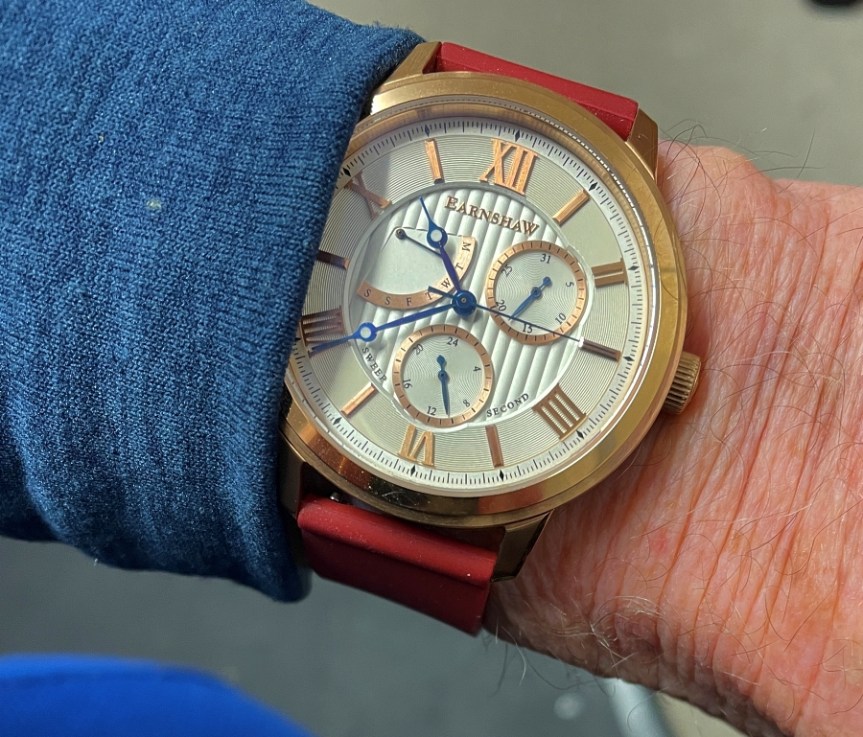
This is the ‘Thomas Earnshaw’ Retrograde rose gold model ES-8060-03 – quite a title perhaps but it looks pretty decent with it’s satin machined side plates and polished top.
The retro dial reminds me of for some reason of the Maurice Lacroix in it’s general look. I like the fact it’s a sensible size 42mm diameter and at 10mm depth is a real bonus for the small/medium wristed, so not too big.
The hour and minute hands are nicely retrograde and well made. And I can’t fault the seconds/minute perimeter index which is finely detailed.
Overall, the dial is nicely configured with various textured surfaces, blue steel hands with small inset white dots. There are 3 x sub-dials showing day, date and 12/24 time. These are nicely made and clear and easy to read.
The advertised ‘sweep’ seconds hand at around 4 beats/sec doesn’t quite match a true mechanical sweep hand, but is the result of the Japan made hybrid Meca-Quartz movement. It is pretty decent with good accuracy and reliability.
I would note that Meca-Quartz really was/is a concept to give an accurate quartz timed watch but with a mechanical chronograph function with instant chrono reset function.
But, as there is no chronograph function in this model, it basically gives a semi-sweep seconds hand effect and is therefore described as a ‘hybrid’ MQ – so if you happen not to like the 1/sec tick of a quartz watch – this should please you.
But nonetheless, it’s a decent movement and to set it up to the correct time, it’s quite easy. Though not having instructions I guessed my way around it – I pulled out the crown fully (2 clicks) and moved it 24 hrs until it indicated the day before the one I required – then pushed the crown in to it’s mid position(1 click) and adjusted the quick-set the day pointer, again to the day before. You get the idea, but quite easy to overcorrect the day as the hands/pointers move very easily, but also easy to re-correct as it were, so no worries. Anyway, that seems to be the way to manage it and it worked out for me.
The water resistance is OK for what is essentially a dress watch at 5ATM, so OK for general wear, but I would avoid water immersion altogether.
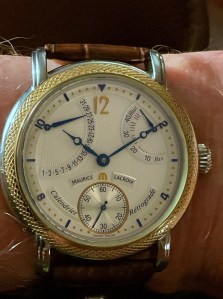
So, overall quite a nice retro styled quartz watch, nothing particularly special about it, but if you like this different retro look – which seems to me reminiscent of the old Lacroix, as the image below of my old one shows, then it’s OK. But of course I much prefer my mechanical ML, which happens to be a particular old favourite of mine! 🙂
The ubiquitous ‘Diver’ watch seem to be all the rage today and if truth be known, they have been for some considerable time. It’s also pretty obvious why. Clearly defined dials in most of them, large hands, numerals or markers, good centre sweeping seconds hands often with luminous dot. Great luminous qualities using more upmarket coatings such as C3 Super Luminova or similar with what is termed a true ‘all night glow’. Strong watch case of stainless steel or Titanium. Decent Water Resistance from 100m to 300mm typically (sometimes better), so expect a screw down back and importantly a screw down crown. So swimming, shallow depth holiday snorkelling and general water sports are fine.
Apart from the main players, such as Seiko, Citizen or Casio there are amore than a few now offering the same specifications as these guys. And this fact IS new and because of this fact alone are now VERY viable and affordable alternatives to the major Brands.
ChronoDivers
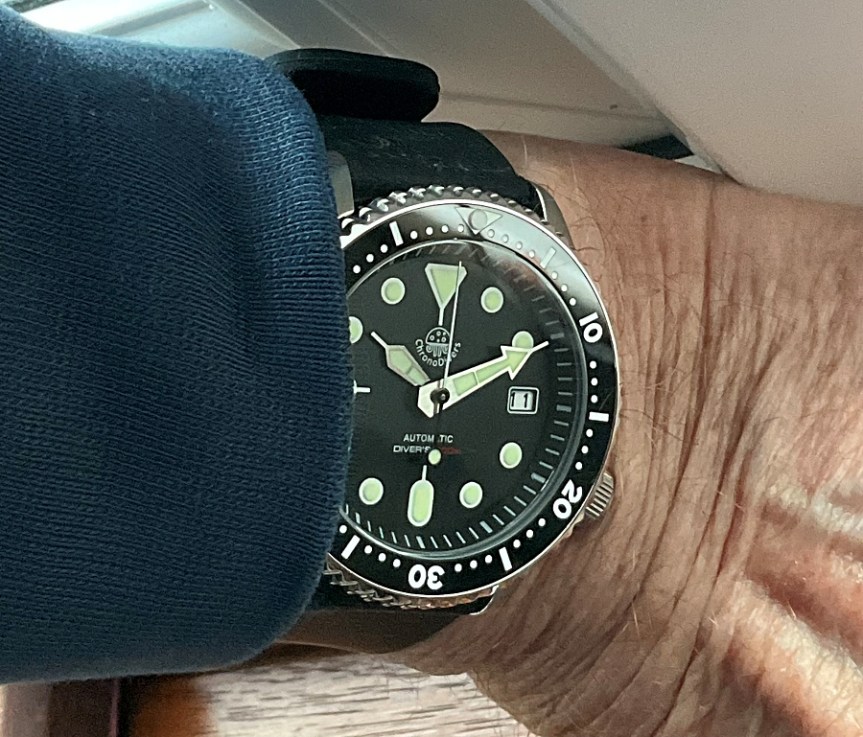
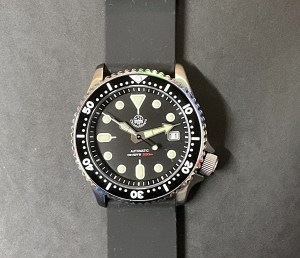
For example – this model from Micro-brand ChronoDivers is their CD200 SKX7 is one such alternative and a very affordable and described it as a tribute to the Seiko SKX007. The case is just 41mm diameter though very solid/head heavy at 87gms. Incidentally it’s supplied with a wave strap and a bracelet, though for me, I lightened it with a non-wave style silicon strap (as shown), so now the overall weight is reduced to just 110gms (which I weighed).
The movement is not some obscure one, but the well respected Seiko NH35A 24 jewel automatic. This allows manual winding if needed, hacking and quick set date, plus a 40 hour power reserve.
This model features an excellent clear and uncluttered dial with a Sapphire crystal, C3 all Super-LumiNova markers, a black ceramic 120 click unidirectional bezel and 200m Water Resistance. There is a date window @3, a large well protected screw down crown @4 and all metal work is marine grade 316L stainless steel.
A nice and unusual touch is the Cabochon top on the crown in lustrous blue, the case top surface is satin brushed and the case sides polished. So not just any old case, but with a bit of style to it too. The very deep black dial background and no clutter look says it all – the classic Diver.
It’s as I say affordable and easily half the price of the mainstream players, yet with a similar specification set. So what’s not to like.
About ChronoDivers – (their web site quotes the following) –“a small family run UK microbrand specialising in the production of low cost – good quality divers watches. Final assembly of all watches is undertaken in Norfolk by the business owner and founder – Tristan Haskins. Tristan has been interested in watches since he was a young lad. His passion specifically in Dive Watches led to the creation of this business in 2019. Every watch sold by ChronoDivers is personally quality checked by Tristan before being dispatched to the customer.”
Note – ChronoDivers watches come with a 12 month Warranty – see terms on web site.
Overall – I like this watch. It’s solid, well made, excellent movement and is a nice addition to my own Diver watch collection.
Just thought I’d check out the mainstream competition alternative to my Cestrian Field Watch I featured in the last but one Post.
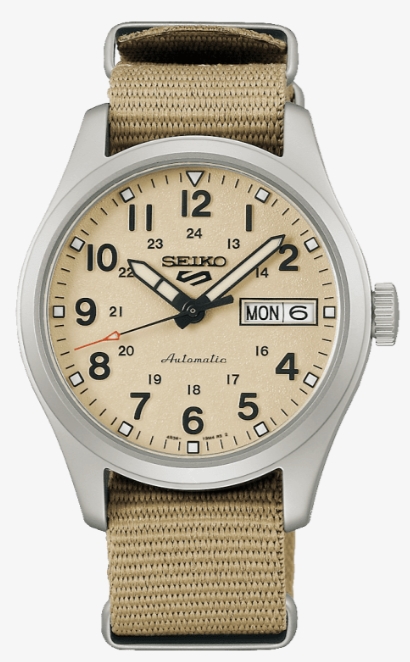
Seiko 5 Desert Midfield Automatic – 100m WR
One that has similar features is the mainstream is the Seiko 5 ‘Desert Kit’ Midfield Sports Style.
Powered by the Seiko 4R36 Automatic movement with manual wind option, it has a similar Power Reserve of 41 hours. It also looks great with a khaki heavily textured matte dial complete with Lumibrite hands and applied grey colour numerals in plus markers. The seconds hand is grey with the point in red plus a small luminous arrow head.
The case is stainless steel and measures 36.37mm wide x 12.52 depth and is a well made solid case. The overall look of this model is more of a ‘Field’ style and the colour combination works well.
The crystal is of curved Hardlex and the case has an exhibition clear back. This model also features a good sized Day and Date window @3.
It has a Water Resistance of 10bar or 100ft and is supplied with a NATO nylon strap with proper metal keepers.
Overall this is a pleasing and solid looking model and is one of the lower priced Seiko models at the moment.
As to a comparison between the Seiko and the Cestrian, the differences are quite small – Case – both stainless steel and similar size. Movement – both have excellent Seiko automatic movements. Crystal – both are excellent – Cestrian uses Sapphire – Seiko uses Hardlex. Dial – both are excellent, clear and both feature a 24hr inner index.. Day and Date – Seiko has both Day and Date, the Cestrian is Date only. Luminosity – both are excellent – Seiko’s Lumibrite v Super-LumiNova. Water Resistance – Cestrianis 200m with screw down Crown – Seiko is 100m without screw down.
Price – Cestrianis around £135 (£160 list) – the Seiko around £245 (£260 list)
What do I think? Both models are really similar in specification and style. Each has one plus point over the other –
Seiko has Day and Date v the Cestrian Date only, but the Cestrian has a 200m Water Resistance + screw down crown v the Seiko’s 100m. So, it’s really down to how you feel about those minor differences.
And of course price does matter.
So, considering the Seiko is twice the price of the Cestrian and particularly in this very close comparison. Especially as both models are equally as good.
But -Price and affordability matters – so, for me it has to be the Cestrian.
Note– I own the Cestrian myself (see earlier Post) and worn it since bought, so obviously I like it. For quality and value it is a winner. What more can I say?
This is an excerpt from a 2014 Post (Get and Forget (2) ) where I flagged 2 x Timex watches I considered at that time – and my views have not changed. But with this update I re-look specifically at the T49967 Expedition Alarm Chronograph, basically as it came up for a battery change recently.
I also realised just what a good watch this was, so I’ve revamped the Post accordingly in the light of experience.
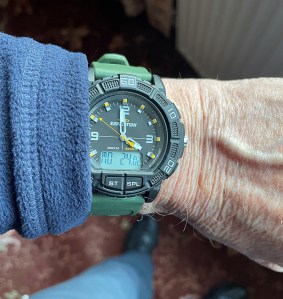
Originally I liked this model because of it’s Analog-Digital design which still retains a classic analogue look. The case diameter is 43.8mm across, but including the crown and crown protection it’s almost 47mm, so not a small watch by any means, but conversely it doesn’t seem big on the wrist. It’s 13.6mm (depth) but maybe as it’s light weight, it wears smaller than it is, albeit with a definite Timex Expedition look to it.
The dial is deceptively good, matte background and well laid out in black with contrasting broad white luminous half filled analogue Hour and minute hands plus a yellow centre seconds Hand. Overall it has a really neat functional look. I checked the luminous quality last night and it’s OK (not massively bright, but certainly usable) and I could make out the time.
Interestingly this model also has the Timex Indiglo dial illuminator, a system that personally I’ve never taken to. So often the principle of silhouetting the hands against the lit background rarely works unless the hands are solid black. So, the bonus fact this model also has luminous hands is a real plus for me.
The wide fixed bezel is clearly marked in tens and does not rotate, as it’s not a diver’s watch, though it has a 200m Water resistance. It is however, a pretty tough everyday workhorse that’s easy to live with.
Functions include Day, Date, Month, Alarm, Timer, Stopwatch and includes a Digital time display well positioned @6 and larger than most. Additional function buttons are on the wide bezel @6 including chronograph control such as Stop and Split laps etc. The bezel is influenced by the “shock” range and gives good overall protection to the watch and the recessed glass.
It is also a perpetual Calendar model, so once the Calendar is set, forget about short months and so on, it’s all taken care of.
Four pushers on the case are broad and ribbed and are very easy to use. The crown is @3 as usual and extremely well shrouded.
(2) Silicon/rubber strap with buckle (2014)
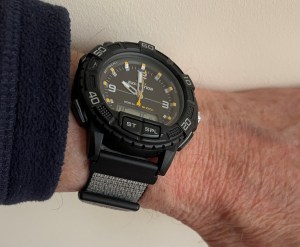
The original strap is a substantial affair in green coloured rubber, fitted to standard case/lug/strap bars. I noted when I first got the watch (10 years ago) the rather thick and slightly stiff rubber felt really quite good and was comfortable. However today I find it just too stiff for my small wrists and tightening it to the correct position is actually quite hard to manage. So, I have swapped it for a ‘wrap strap’ which fits better, is instantly and infinitely adjustable (no holes or buckle) and is very much more comfortable and suited to me now. (see image 4).
This model is a rather understated gem in my opinion, as it’s one of those models that manages to get the basics right and the overall “form” is pleasing. The function are unobtrusive, it fits well to the wrist and does everything rather well.
In fact, I was so taken with it (again) that it’s going to be on my wrist for the next month. Changing the battery was easy (CR2016) and as simple as removing the 4 x screw back, unscrew a small battery keeper tag, swapping the battery and doing it up again in reverse. Took about 5 minutes.
(3) T49967 – image 24th February 2025 after 10 years use.(4) Strap change to a wrap strap ‘velcro’ close – no buckle and more comfortable for me.
A point to note –
In the digital display by default it shows the time (as the analogue hands), but if you want to show the Day, Date and Month (the calendar) you push the ST button on the lower bezel and the Calendar will flash up for a second. To permanently show the Calendar display rather than the Time display, push and hold the ST button for at least 3 or 4 seconds. This will show the date, day and month then set – then release the button and the Calendar will stay indicated as the default view. So at a glance you now have the analogue hour, minute and seconds hands on the main dial and the digital display will be showing the Calendar. (and you can reverse the sequence as you wish). For other functions you simply push the Mode button and the display (4) cycles through each one as required.
Also when setting the digital display the Calendar can be selected to show either US or UK style (Day, Date and Month) – something I really wish others would emulate.
What would I like to change on this model? – Well, even though not a diver’s watch, the fact they’ve taken the time to have a really well figured bezel and as the watch is rated at a 200m water resistance – it would be nice if the bezel moved.
But having said that – it is still a very tough ‘Get it, Set it & Forget it’ every day practical watch – it’s also unlike most Timex models today and I am very glad to have it.
Note – images – the varying shades of my photographs, depend on the light at the time. The most accurate in this Post are images (1) and (4).
A 2025 reprise of my Classic Junkers 6060M-5 Bauhaus.
Time, Date, Power Reserve and 24 hr sub-dial from Junkers.
Bauhaus bridging the gap between art and industry by combining crafts and fine arts, this model absolutely fits the bill for me. The Bauhaus movement began in Germany in 1919 and was a style template for great things in all walks of life and a fusion of the practical and the aesthetic.
Here the concept is displayed in a rather stylish model and it has always attracted me and as I already love the Art Deco look, this suits my idea of what I want to wear. With a Stainless Steel 40 mm diameter case and around 11/12 mm height with a cream coloured elegant dial, under a proprietary domed Hesalite crystal, this looks rather good.
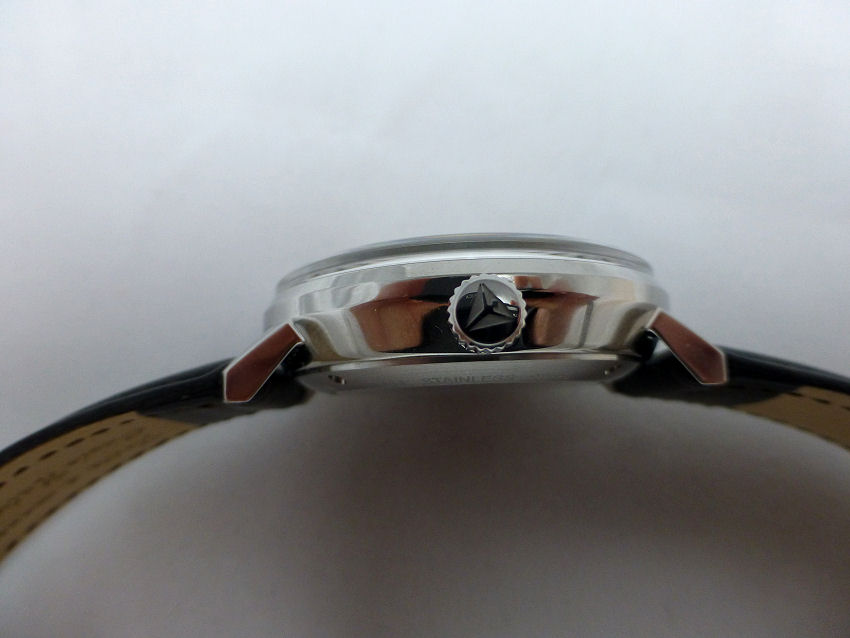
The proportions of this model entirely suits it’s Classic look and it looks great on the wrist. And this is not the first model I’ve had with Hesalite crystal which is actually quite good, glare free and extremely shatterproof, though conversely soft enough to scratch. The upside is that any scratches you do pick up can easily be polished out (if not too deep).
This Junkers Bauhaus version comes with a modified Citizen 9132, 26 Jewel Automatic movement,
Citizen 9132 Automatic with +40 hours reserve
beating at 28,800 vibrations per hour with Date aperture @3 and a decent Power Reserve of over 40 hours. An ultra smooth running centre sweep Seconds hand in black and a 24 hr sub-dial featured @6 with a Date aperture @3, plus a Power Reserve indicator @12. The Date is adjusted by the centre crown and features hacking (the watch stops whilst the crown is out to the second position) so accurate time setting is easy. Dot markers at 3, 6 and 9, are green luminescent, as is the infill area on the small Logo @12. The fine gold coloured stick Hour and Minute hands are also luminous filled. Overall the dial is as Classic as you can get. The modified Citizen movement is a good choice in my opinion and in my experience can be remarkably accurate. Some reports indicate the rotor can be noisy, but this particular movement is no better or worse than my other automatics. This model features an exhibition back through which you can see the silver textured rotor movement and gives that little bit of added interest.
Chunky look accentuated by the Hesalite crystal.
The watch appears to have a close resemblance to the Max Bill series that I also like in that it shares the elegant yet simple dial layout which is uncluttered and practical. The 20 mm strap is slightly thinner than my previous Junkers and is of amazingly good quality, being of a high quality soft leather. Regarding the holes available and my smallish 165 mm wrist, it’s a neat fit on my smallish 165mm diameter wrist.
Wearing the watch –
Super comfortable with this strap and case dimensions (at 40 mm diameter the ideal dimension for this style of watch). The watch being rather chunky can look a little larger than it really is once on the wrist. Due mostly to the height of the case and also owing to the quite thick and rounded Hesalite crystal, easily 2 mm above the case (my wife thought it rather like the icing on top of a cake). Personally I love the Classic Bauhaus look of the watch and pleased it does not have the rather large Shield Logo as some, instead having just the name @9.
Junkers 6060-5 Bauhaus automatic
Luminosity –
With green luminous paint applied just to the Logo @12 and the dot markers @3, 6 and 9 plus the infill on the very slim hands you would be forgiven thinking the watch was not so good at night. And you could not be more wrong. It was, in fact excellent and I found I could still read the time in darkness some 5 hours later and this was managed without artifice. Watch sitting under my bedside light table while I got ready for bed – perhaps 10 minutes? In other words in a very normal situation. I was very impressed.
Automatic in use –
As an automatic mechanical model the Citizen 9132 is very efficient and takes very little wrist movement to wind it. Basically as soon as you put it on – it starts and unlike some movements, does not require any winding to set it off. I’ve found that once it’s on the wrist the power reserve very quickly indicates it’s fully wound.
Just to go back to the quietness of this movement –
I’m pleased to say that I don’t hear it at all on the wrist and only when pressed against my ear and I also don’t feel the rotor moving in normal wear. The movement itself via the exhibition back actually looks quite refined and not as utilitarian as some.
So any down sides?
None whatsoever – it is a Classic watch, perfectly proportioned and after a few years on my wrist the entire ensemble feels smooth and part of me.
Accuracy report –
As I guessed with the Miyota 9132 movement, it lives and has lived (over the last 10 or 12 years) up to expectations for an alternative to the Swiss ETA 2824 calibres.
In fact the Miyota 9100 series was introduced as a successful and affordable alternative a while ago and as the Swiss maker ETA policy was to cease supplying movements/parts to all and sundry, somebody had to fill the vacuum. As for time keeping this Junkers Miyota movement manages between 3 and 5 seconds (fast) per day and that’s straight out of the box (today some 10 years later it’s settled down to better than 3 secs). Unsure whether Pointec (Junkers Agency) have time adjusted it at all, but I’d say it’s easily as good practically as the old ETA 2824 and certainly in this limited complication.
Can’t help but think ETA made a bit of a misjudgement (even suicidal) with this Policy, as it was inevitable that the Asian/Japanese brands would step up to the plate and produce not only a movement to rival ETA, but at a fraction of the cost. In my view the customer benefits tremendously, certainly on new models. My sympathies go out to pre-owned collectors and existing owners regarding the cost of repair and replacement parts for original ETA movements.
Quote – Competition is always a good thing. It forces us to do our best. A monopoly renders people complacent and satisfied with mediocrity.
Quote – Nancy Pearcey
And I have to agree 🙂
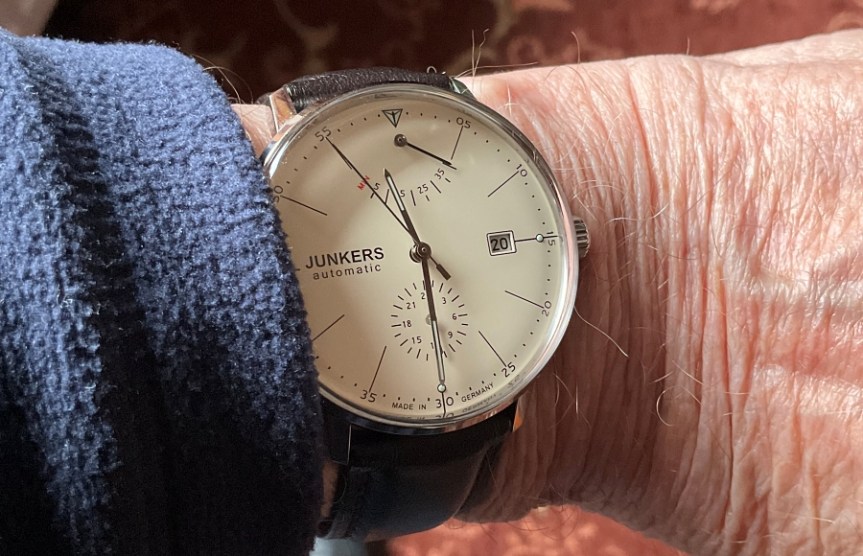
And this is it today Feb 20th 2025 –
Junkers Classic Auto Bauhaus – Image taken 20th February 2025 at the time shown.
As good today as when bought and still one of my favourite watches. A lot cheaper when I bought this one back then and although the model has hardly changed, it will cost a bit more today – around £840 in the UK.
And after 10 or 12 years ownership I reckon even at todays price, it is a bargain and very much worth the money. And note what I said about the auto movement. The power reserve is showing maximum so even at my age I’m moving well enough to have the watch run at peak performance.
When I bought this I thought it might be a little big on my smallish 165mm wrist – but this picture taken today rather disputes that idea. Looks pretty good to me.
And if it’s showing that, it means that I’m not doing too badly either! 😉
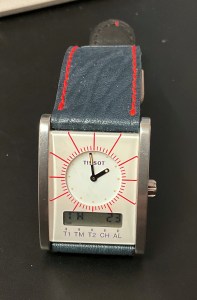
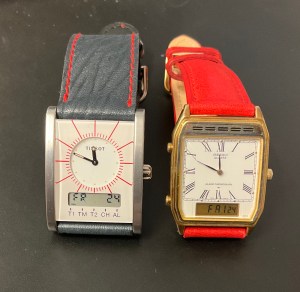
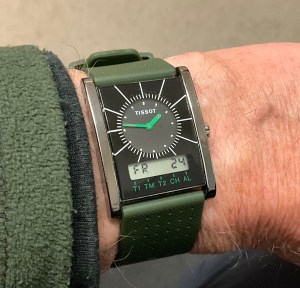
After Posting my 1986 (38 years old) dual display 7 jewel quartz Tissot Two Timer (D377) I Post here another one I have. And this is also an original first edition model, before the advent of the altered case lugs and bespoke strap configuration and four screw back plate, but with a similar but different dial layout.
As said in my first Post on the Tissot Two Timer – this model was introduced as a higher quality Swiss alternative to the often variable quality analogue/digital watches coming from Asia.
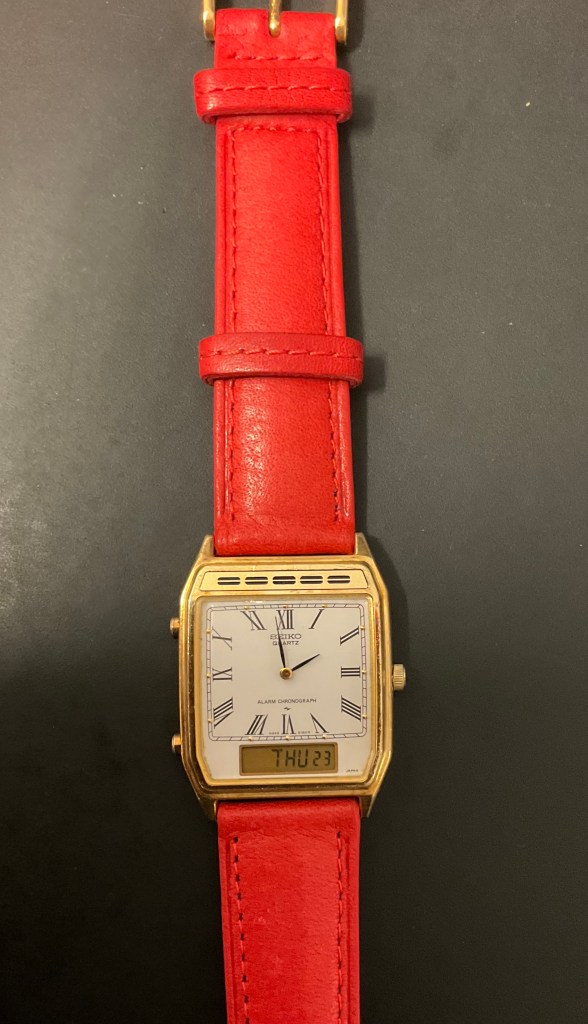
Seiko H249-5130 – analogue/digital 1981
And as Seiko were one of the major producers of this concept (plus Citizen, Casio and a few lesser brands) I thought I’d manage a quick and brief comparison between my Swiss Tissot and my Seiko H249-5130 model of the same era. Both have very similar functions and date of manufacture just 5 years apart. The Seiko 1981 and the Tissot 1986.
Both models are pleasing to the eye and both have an analogue handed dial plus a single line digital display.
The Tissot Two Timer is a high quality cased model in fine, smooth stainless steel. Sleek dimensions at just 8.5mm depth with a curved top plate and Sapphire crystal and a case width of 27mm and lug to lug of 37mm, with a high quality 22mm wide Tissot leather & stainless buckle strap. As a neat dress watch it is pretty much perfect. (note the plain strap means it’s easily swapped, unlike its later version). The case quality of this particular watch is as new, no scratches, perfect. There are also no buttons or pushers on this model, as it employs a good sized stainless steel crown for all adjustments.
The Seiko case is of an ‘SGP’ or Seiko Gold Plate base metal, un-curved with a flat crystal. It is very thin at just 6.7mm, around 27mm case width and lug to lug of 37mm. On this model the ‘thin’ Gold plating is just holding on with just noticeable (close up) wear showing, but is still pretty good for it’s age of 44 years. The case back is stainless steel. The SGP case finish, whilst it can look good when new, does tend to wear and flake over time. And this one is showing it’s age now (Gilt has a max lifespan of 30 years?) but can’t compare to an un-plated stainless steel case of the Tissot.
Tissot & Seiko compared – note digit separation
The Two Timer features a battery hatch (eventually introduced to Swatch) and is as good now as it was when new. A bonus too that its rubber seal is intact, so it should still be Water Resistant to 3ATM or 30m (slightly better than splash proof, but not full immersion). Certainly good enough for a dress watch. (however, if you buy any pre-owned watch with a battery hatch – check it has the seal before getting it wet!). And note this stainless steel case back does not open.
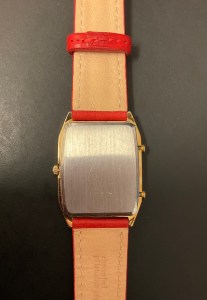
The Seiko has a stainless steel back, but is a ‘snap’ fit – so I wouldn’t class it as Water Resistant, but will probably manage the odd splash – maybe.
The Tissot employs the single crown system, controlling time settings and all functions both digital and analogue. It is also very smooth and precise. This Tissot single crown system is about as good as it gets and whilst there are no push buttons, the crown does have a push function.
The Seiko has a rather small centre crown on the right and 2 push buttons on the left of the case. They are also in gold tone and both pushers have a slight issue of weakened springs, which was and always has been an issue with early ‘pushers’, though so far both work, albeit a little slowly and sometimes require a few attempts.
The analogue dial displays of both watches are clear to read, though the Tissot has more contrast and digit separation is better and the Tissot dial area and display are slightly larger overall. The Seiko gives up some of the space for the Alarm speaker, though in practice the Tissot has the louder Alarm.
Yet another Two Timer – alternative colour set – with blackened stainless case
There’s no doubt that the Two Timer model has a sleek wrist hugging design and produced with so many face designs, it seems to have a wonderfully fresh look every time I see one. And not many models can boast that versatility apart from maybe Swatch today, which is unsurprising as Tissot was a founder member of Swatch back in the day (and still a member today).
As to design – the Seiko, whilst the latest thing back then with a dial and display combination, somehow looks a little dated now, whereas the Tissot is very much of today. In fact it is difficult to realise the Tissot is 38 years old, basically owing to the overall design, build quality, materials and look plus comfort and functionality are quite a step up from this particular Seiko.
Seiko H249-5130 stainless ‘snap’ fit case back
And the Tissot Two Timer is maybe a bit of an oddity – produced to fill a gap, yet shows it’s superb Swiss heritage so well. The overall design and build quality a testament to Swiss design and watch construction. Also Tissot’s LCD digital display is clearly superior to the Seiko of this period and I know that Seiko, Citizen, Casio, Zeon and other analogue and digital Asian models in those days were not without issues.
However, considering the period, both watches have a raft of functions – such as – Home time, 2nd time or zone, Quartz movement/module, analogue hands and digital displays either linked or viewed separately, indications of Day, Date, Month, running Seconds, a Chronometer, Alarm, AM & PM indication, 12/24 hour selection. Very similar in fact. And in the case of the Tissot, functions are controlled by a single crown, which was quite an advance on what was an Asian digital watch revolution at the time.
My opinion, for what it’s worth, is the Tissot Two Timer is and has always been a bit of an ‘under-the-radar’ model. In fact, I’d say an understated classic, as it stands up so well even today. And I have not come across another Ana/Digi watch of that period with a better timeless look to it.
However, as said at the start, this comparison is perhaps a little skewed, as the Seiko was made in 1981, the Tissot in 1986. And 5 years is a long time in watch development, but regardless of the advancements, the Swiss Tissot Two Timer stands above any comparable Asian models of that time in both design and function.
And of course, model wise there are later Seiko, Casio and Citizen models around that likely better this particular Seiko H249 series, but my conclusion remains.
Just a word on the single crown control –
Ever since the Crown of a watch was introduced back in the early 1880’s, it was a revolution. John Arnold an English watchmaker first thought of some sort of knob to replace key wound watches of the day. Then Breguet took the concept further, allowing the Crown to manage more functions. So, the concept of looking at new ways to expand the Crown’s capability is not new, but with the Tissot Two Timer, the Crown reached new levels yet again. Especially in regards digital function, which is a complication all of it’s own making.
Anyway, whilst it all seems rather complicated – and of course, it is (a bit like an inkjet printer – it prints – but boy! it IS complicated). The trick however, is to manage the “user interface” to make it useable.
But for the watch Crown user, once done a few times – it really isn’t and there is a logic to it.
Generally – with most multifunction digital models, it is a case of selecting the function, either pulling out the crown or pushing a button will cause the digits to flash. Then either using pushers or crown, alter them to suit, then shove the crown or pushers back to the neutral position.
But as with all of them, unless you wear the watch frequently, it’s easy to forget what to do. And in fact, there are many modern digitals today that can get you frustrated.
On this Tissot there is a first and basic procedure that starts it all. And this is whether you’ve got one that’s displaying wrong or you’ve just changed the battery.
First thing to do – is synchronise the analogue and the digital displays.
And if you remember this first bit, then usually you start to remember what you’re doing (basically get things flashing, adjust and so on as above).
So, to synchronise –
And in this order – we first want a blank digital display by simply turning the Crown any way. Once the display is blank (off), pull OUT the Crown – this switches ON the time display. Then turn the Crown (this moves the hands – so you move them to match the digital time). Once the hands and the digits show the same time, simply push IN the Crown again. You are now synchronised!
Now you can set the correct time – With the Crown IN as you’ve just done, turn the Crown again until T1 on the display has a small cursor line below it and a digital time indicates. Pull out the Crown and the hours and minutes flash – and turn it – this time the hands and the digits will move together. (moving the crown slowly moves it minute by minute and FAST motors the hands quickly – like in hour jumps!). Set the correct time approximately, OR if you need to set it to the second, the seconds display will flash for another minute to give you time to set it exactly to the second. Then push in the Crown again.
And that’s the very basic bit , or what I usually remember bit, done!
Personally I don’t set it ‘to the second’ – let’s face it I’m retired! who needs seconds! Roughly to around the minute is fine for me.
And for the rest of the adjustments like Day, Date, Month, blah blah blah – get the instructions out! Then forget it all for the next 4 years or so until the battery pegs out! Then hopefully you might remember the basic bit – (blank display, pull out the Crown and move ”em all at once – yes?) the basic bit! above – then for the rest of it, you might have to findthe instructions!
And finally – the best Tissot Two timer instructions I’ve found are here.
Always nice to have a new Daily Beater – that is a watch you can wear everyday, easy to read, luminous, good size, dependable quality, tough, decent Water Resistance. One that also indicates the Date is always useful. Now, I have had a few daily beaters over the years and I’ve still got them all, because there as easy to slip on as a pair of socks or gloves. They’re one of those every day things you can take for granted.
Casio Daily Beater – TM61000 C3
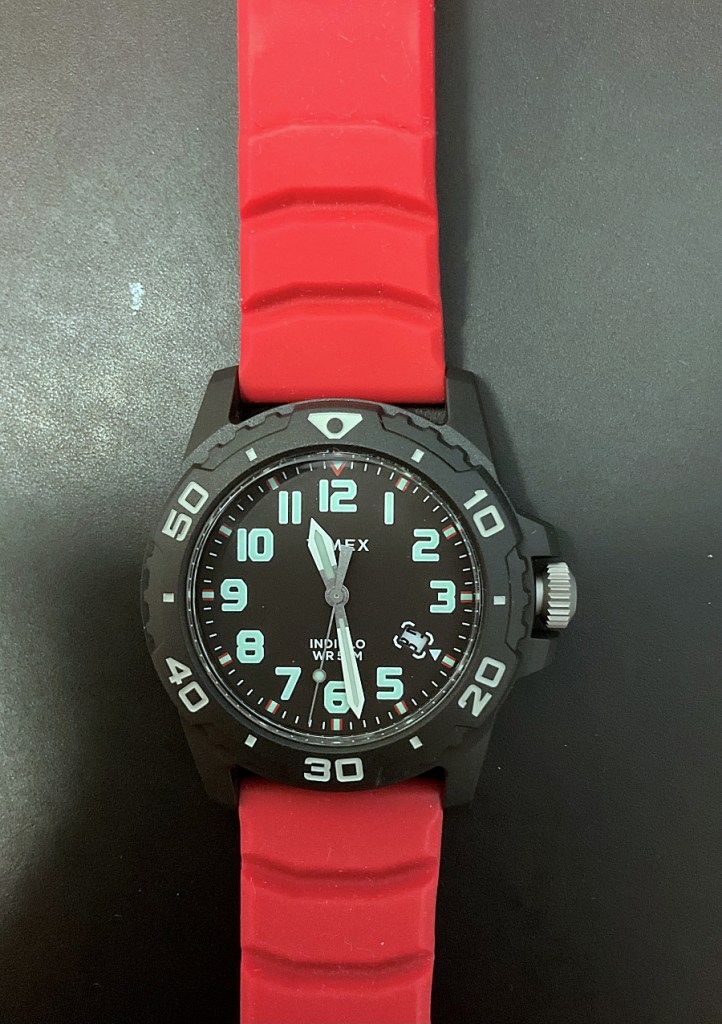
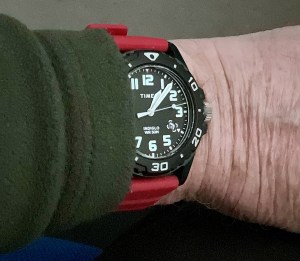
However, I might have to question this Timex TW5M61004. It has been called a ‘Main Street’ model, perhaps another way of saying Daily Beater, who knows, but this is the model number which is more important to know.
A friend who recently got himself one is actually very pleased with it and he showed it to me and asked my honest opinion.
Always a tricky when that happens, isn’t it?
Well, it’s a Timex Quartz movement, so that should be OK. I do like the size of it at 42mm diameter and it lies flat on the wrist as it’s just 10.5mm thickness. The case is resin with the typical Timex stainless steel 4 x screw back, which has always been dependable. It also manages a 50m Water Resistance and it’ s NOT expensive.
Casio daily beater on the wrist – neat size – looks good.
It comes with a conventional pin buckle coloured silicon strap in red or black – this is the red one and I agree with him, it looks great and for once not too stiff (so many “rubber” straps at too stiff these days). And being attached to conventional spring-bars, it’s easy to change for any strap you wish. So, not a bespoke affair which is a real plus in my book. It’s also a quick release type which is very useful as no tools are required to do a swap. So, for this strap, I have to give it a +100% rating – as it is very well made, flexible and very comfortable indeed. In fact, I’d go as far to say it’s one of the most comfortable straps I’ve worn from Timex.
So far it’s all good.
Now, while this model looks like a ‘diver’ model, it isn’t – and Casio do not describe it as such. But it does ‘look’ like one and is pleasing to look at. Mildly male orientated I suppose with the dial, hands and numerals design, though of course the distinctive bezel does NOT turn.
Some might say this is terrible, but it isn’t a diver, so it’s not – in fact there are more customers of ‘diver’ watches who don’t swim or even to go near water, so hardly divers? So, most buyers won’t bother and if nothing else it looks good and maybe quite handy for a ‘quick glance’ time check for 10 or 20 minutes.
The large diver style hour and minute hands are OK and there is also a centre seconds hand, which is always handy to have. But and maybe this is my first ‘but’.
The seconds hand is grey coloured which I find at certain angles not that easy to see, even though there is a seconds ‘spot’ at the sharp end. To me, if you have a centre sweep seconds hand then I want to see it clearly, otherwise what’s the point.
The main hands and the numerals are according to the spec – luminous – and they are, but only just and certainly not really what I would consider luminous.
These are too faint and just maybe if you’ve got your glasses on in the dark, then hopefully you might see them. For me – simply not good enough.
Ah! I hear you say – Casio has Indiglo – to which I say – exactly!
I mention this because Timex have also incorporated their “Indiglo” night light system in this model – though for me this is a system that has never won me over.
It basically allows you to push in the crown and the entire dial lights up in a sort of blue/green glow and the hands and numerals are then backlit, appearing as a dark silhouette idea. Now, I have always found that the glow is often so bright, it sometimes swamps out the silhouetted numerals. So, this is not my favourite system – I would much prefer really good luminous hands/numerals etc. every time. And OK and apologies to my friend, but you asked – and that IS my opinion.
The rest of the watch ensemble is pretty well made, the resin case is tough, the large crown easy to use to quickly set the hands and so on.
However, another small niggle is the Date, which is indicated in a small window @4 – which in this instance could definitely be bigger, as the window recess is too deep and casts a shadow and not that easy to read. And double digit dates without a 1, can appear crowded, so really not that easy to read at a glance. If the window was a fraction larger and the date wheel closer to the dial, then it would be much better.
I would also note the date transition period (when it changes over at midnight) is one of those long ones, so for maybe 30/40 minutes the window is in-between dates – and with this small heavily recessed date window – VERY tricky to make out.
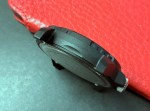
Clever little strap case notch
A nice point I noted was that between the lug bars, where the strap fits, there is a notch cut into the case, which allows the strap to sit snug against the case, without the case curvature getting in the way. This is a neat idea rarely seen and it’s a good idea.
As said this watch is Quartz and powered by the easily sourced CR2016 battery, so should be good for around 5 years or so.
In summary then I would have to say – I quite like it as a basic Timex which is OK and is not going to break the bank. And yes, it’s probably perfectly fine as a daily beater, though I would prefer also as a nightly beater with better luminous hands/numerals etc.
But on the other hand it IS an extraordinarily comfortable watch on the wrist and my personal gripes probably won’t bother my friend in the slightest or another wearer, unless a picky old guy like me.
It is what it is – and so am I! After all he did ask!
Checking out digital watches over the last few weeks, it is very noticeable that so many of them are over-complicated. Displays (some not very good) that are really cluttered with so much information they are difficult even to read. Certainly not at a glance, which is how I’ve always checked a watch and usually because at that moment I simply want to know the time.
This got me thinking. Amongst all these offerings, could I find one that clearly and simply, could show me the basics – and at a glance.
SNE 1206S Ultra Thin Digital watch – and it’s very excellent display.
First I decided what I wanted from the watch. What are my personal requirements?
Well, the first and foremost one for me is simple – CLARITY. I want to be able to read the damned time – without too many display distractions.
So, my requirements –
1) – It has to be easy to read the time.
2) – The display needs good contrast, be uncluttered and show me the basics clearly –Hours, Minutes, Seconds, plus the Day and the Date.
3) – I would like to be able to read the time in the dark.
4) – An alarm would be useful.
5) – It has to be easy to operate (without referral to instructions).
6) – Good quality construction, sensible sized case (without the ‘macho’ so-called ‘military’ silliness), plus a conventional strap (not a bespoke affair or a bracelet).
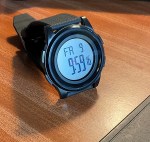
Easy sit up Alarm clock!
(Note – with a conventional strap & pin buckle, it’s easy to sit the watch up on a bedside cabinet as an alarm clock – see image)
Armed with my list I started my trawl of digital watches – and there are literally many, many hundreds. First I start eliminating the expensive ones, the over-complicated, cluttered displays and those with model specific straps and of course the poorly made ones.
Sits flat on the wristChanged look with a quick/fit soft silicon colour strap.
After all that, I finally, finally came up with this one – the SNE 1206S Ultra Thin Digital Watch
It is Chinese, as many, many of the cheaper digitals are, but this one meets my requirements pretty well.
The Brand is SNE, though there are so many ‘brands’ in China, it could be a one man band, a family or a small assembly house, who knows? I suspect this is from a small outfit, who buy-in bulk parts, importing where necessary, case locally and then export the assembled product. Using Amazon you can supply the world! This particular model was in an Olazone box with Panda logo, as the watch back (I’ve also seen a ladies white cased version). And there are other sellers marketing this watch or similar with slight differences such as display data, so there should be one to suit almost anyone!
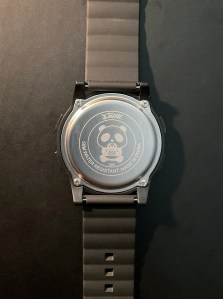
4 x screw stainless back plate & 5atm Water Resistance
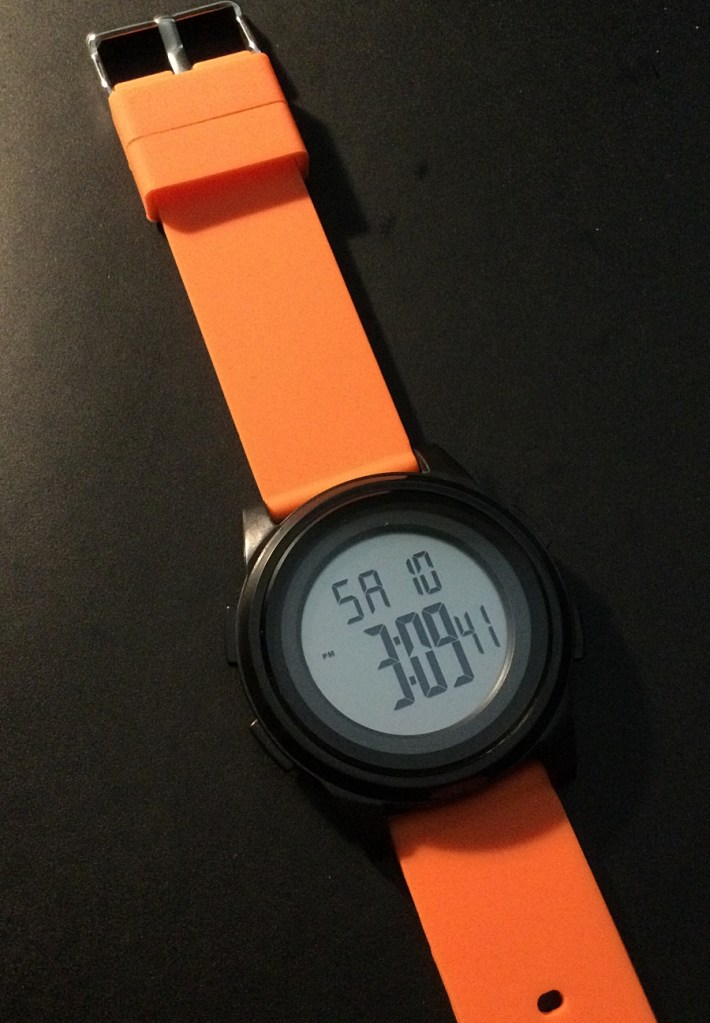
On this model, the case is PU resin, well made with a 4 screw stainless back plate, claims 5atm Water Resistance, though personally I would use this for everyday use, splashes and so on. Which is OK for me. The case is 43mm diameter and as advertised, Ultra Thin. It measures just 9.5mm. And being so flat on the wrist it looks good on smaller wrists. This model is also extremely light at just 36gms.
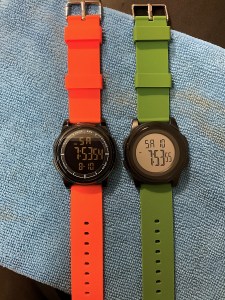
The thin flexible PU strap is OK, if a little bland and fits to the case with conventional spring bars. This means ease of changing to most watch straps of your choice if needed. (Note – not the first time I’ve said this, but many models have hard resin fitted or bespoke straps and difficult to replace, if at all – so, here’s my alternative in orange – certainly changes the look and it took me 43 seconds!)
A hard (probably imported) scratch proof acrylic crystal allows full view of the excellent and clear module display.
I particularly like the ease of reading, what I consider ‘at a glance’ – the main display of Hours, Minutes, running seconds. Plus the Day and the Date.
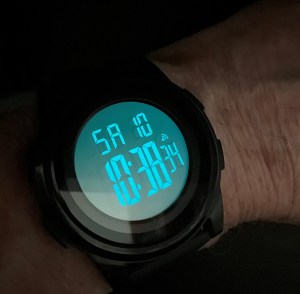
Excellent EL back light – for low light/darkness.
Having retired many years ago and no longer working, I never know what Day it is, or for that matter, the Date. Simply as their relevance is of no real importance anymore. (retired folks may well understand what I’m saying). So, having both those displayed clearly is ideal for me. And conversely, I don’t need the watch to indicate the month or the year, because for some reason I never seem to forget these! And if I didn’t know them, well, I’ve got other issues!
So this uncluttered and excellent high contrast display, shows just what I want or need. Very clear and the EL back light for low light/dark use, is exceptional.
The watch is quartz powered of course and the battery required is the relatively large and easily sourced CR2016.
The functions are pared down basically to what is useful to me –
Mode pusher (B) – lower left – each press selects each display in rotation –
1) – Main Time, Day and Date display, with large Hour and Minute digits with running Seconds.
2) – Alarm – with snooze and hourly chime (selectable).
3) – Stop Watch – with split time (upper (D) pusher for start/stop and lower right (C) pusher for reset)
4) – Settings – adjusts with upper right pusher(D) and lower pusher (C) selects each item in turn. Note – for the EL back light – press upper left (A) pusher. To instantly alternate 24hr/12hr time, press upper right pusher (D) when in Main display mode. Super simple.
Note that I haven’t mentioned setting the year and that’s because you don’t. The internal module is Auto Calendar. Once you set the Day and the Month, the module does the rest. These are usually programmed until 2099, so no worries on that score.
Another plus for me is, the watch and pushers are quite discreet, with no clutter on or around the dial. If you want to liven it up, the best way is to change the 22mm strap for a coloured one (as shown above in a soft orange silicon).
However, the real clincher is the price – this one just £17.99 with free postage from China and two weeks to arrive. Some of the variations of these models can cost even less, so it’s well worth checking them out and if you are into watches, then this both fun and cheap! However, this time my clear winner is the SNE as above.
GoldenHour GH1313 Thin Digital
Another model worth looking at – The GoldenHour GH1313 with alloy case and different data display module.
This is slightly heavier at 59gms, but still a light watch. It has a different module and displays Time (Hrs, Mins, running Secs) plus Day, Date and Month (note the month precedes the date – not UK style and cannot be altered).
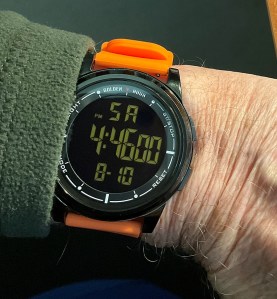
This display type is also quite clear, though in low light it can’t match the SNE watch above. However it also has an EL back light which is excellent, so not an issue. The pushers positions on this model are identified on the dial circumference, but I note it also has hour and minute indices which are irrelevant, as this is not an analogue watch with hands!
Perhaps the information ring is used with other non digital models in their range? Who knows.
GH and SNE digital models with colour straps – look good.
I fitted a quick release orange strap just to see how it looks – the original came with a very thin, green coloured flexible PU strap, but of course easy to swap around.
Once again this is a rather well put together digital model at a very low cost – worth a look (Amazon UK).
Colour straps can really liven up the often dark Digital models.
I’m very encouraged after trawling through so many cheaper Digitals, not expecting to find really decent watches. So, something of a surprise that there are a few that appear to get the basics right. This won’t be the last time I have a look at what’s on offer – and it’s fun!
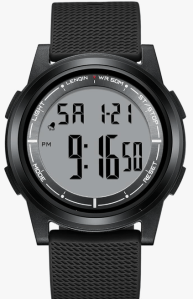
A growing number of extreme low cost Digital models have been appearing over the last year or so. These models are challenging the better known Brands, such as Casio, Citizen and Timex. I’m unsure if these are genuine ‘Brands’ or Pseudo brands, as they seem to appear almost weekly in different guises and obviously utilise a variety of digital modules. Many offer the same features, or the same or similar case and all are very cheap.
‘Hanposh’ or ‘Lenqin’ Digital model – same case, slightly changed module/dial configuration.
For example – This is a very similar model marketed by ‘Hanposh’ with yet another name on the dial ‘Lenqin‘ and a slightly different module (shows the Month) and I recall it was even cheaper!
Buyer beware – So, whilst it all sounds great for the buyer, I’d caution that these products are basically just assemblies. They don’t appear to actually be watch Producers as we’d know them, so no real factory Quality Control and possibly no meaningful Warranties. Also many of the descriptions (especially on Amazon) can be incorrect, such as dimensions, features and functions (as if even they get mixed up with the parts they assembled). And true Water Resistance (note – the term “water-proof” in regards to watches is never used) claims can be dubious to say the least. So as this paragraph title says – Buyer beware!
However, that said, I have two different models from different named suppliers and so far, they are both working as they should – but that’s the thing in this digital game, you’re either lucky or you ain’t.
Gerald Genta G3268.G Bartolomeo – Alarm (Omega 980 19J movement) back from service and looking good.
This was my first Gerald Genta and after taking it from it’s display resting place (apart from a couple of weeks annually that I wear it) I thought it could do with a bit of a service. So, a month or so ago I sent it away for a complete service and am delighted to say it’s back and is as good as the day I got it.
My Genta Bartolomeo (image updated April 2024)
My model which features the Omega 908Automatic alarm movement from sometime around 1995, so bang in the middle of Gerald Genta’s best production period – and as I’ve discovered since, this particular model is rather rare. The 980 movement itself appeared first back in 1968, used in Seamaster models and the Memomatic of 1970.
Only a very few of this model have been seen at auctions in the last 15 years and this one changed hands at least once before it got to me. I love it as it shows off the Genta style and was my first introduction to the Brand.
To recap – this a Gerald Genta Bartolomeo Alarm Calendar watch with slate dial and centre rotating disc wheel, gold filled numerals and luminous markers, gold hour, minute and seconds hands, plus the GG logo in gold on a red tipped Alarm pointer, which is on the central disc. This points to the hour and the half hour and enough space is on the index for pretty accurate setting of the Alarm time.
The Alarm function is indicated by a central rotating disk and operated and set using the upper Crown.
The time is set by the main/centre crown @3.
The mechanical Alarm is activated by the upper crown(between 1 & 2) when pulled out one click. With the upper crown pulled out two clicks, it disengages the main crown from the hour and minute hands, which then allows the main crown to set/move the Alarm pointer hand (disc) – in either direction. Pushing in the upper crown, re-engages the main crown to the hour and minute hands, as normal.
The alarm is mechanical and the sound is produced by a small hammer striking a gong attached to the movement. It is what I would call (and Omega said this too) a discrete sound and rather nice in comparison to the modern digital ones. I find it really quite good as not only I can actually hear it (not so with digital alarms as I’m at an age now where I don’t hear certain frequencies) plus it has a bonus of a gentle vibration as the hammer hits the gong.
The watch (although automatic) can also be manually wound using the main crown.
Also of note is the fact this Alarm does not require winding – this is done automatically by the normal auto movement (one winding barrel suffices) and is operational again within an hour of striking, with normal wrist wear.
This is almost the same as the Omega Memomatic which shares the same 980 movement. The difference being the Memomatic has a second disc on the dial which has inscribed minutes, which allows it uniquely to be set precisely to the minute.
The dial layout also features a clearly defined large Date between 3 & 4 o’clock and there is a handy quick set date adjuster, just below the 2 o’clock position on a small raised case mount, in the form of a small pusher.
The bronze coloured bezel is secured with 4 screws. The crystal is Sapphire and slightly domed. The watch case is stainless steel, as is the back with securing screws. On the back is the serial number & model details inscribed plus the brand logo. The Gerard Genta logo is also featured on the red tipped Alarm pointer, which form part of the central slate disc on the dial. (Note – a few Genta models feature bronze cases and it’s sometimes tricky to tell, but I thing this one is steel).
My Gerald Genta still has the original T bar leather strap and the original signed stainless steel double deployment clasp. Case diameter is 40mm ex. crowns. and 13mm thickness.
The value of this watch is certainly higher today than when I bought it at auction and as said, few of this one have appeared for sale. So, I’m really pleased with what was at the time, an impulse buy!
Gerald Genta watches are seen as an iconic brand and this one started off a small personal collection of the brand – though this, as it was my first, is my favourite.
Update (April 2024) – So the watch is looking good, serviced and polished and with a new 2 year guarantee no less, no issues during the service and appears as good as it was when made – I am very pleased.
They are a relatively recent company, a French manufacturer, based in Paris, with their manufacturing facility in Switzerland. They came into being in 1992, when they used the German manufacturer, Sinn (I liked their U1 1010 Diver (though big) and more recently the Sinn 105 St Sa UTC) for initial production, but in 2002 became their own man so to speak, when Bell & Ross really came into their own.
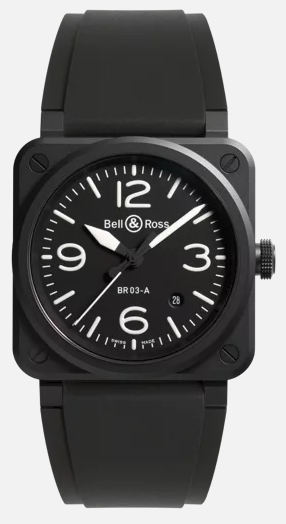
The BR 03 – not as big as it looks at just 42mm across.
Their philosophy was and is simple and according to their own literature, their watches meet four basic principles: legibility, functionality, reliability and precision. They are also known for the BR series of models which were square cased. Mostly based on aircraft instrumentation for style and legibility, they soon became favourites with pilots, divers and other action occupations and of course extreme sports lovers.
But for me I like them for one main reason (amongst others) – because they manage to make what appears to be a large watch, with great clarity and readability – appear small.
And that’s no easy feat, especially with a square case format, but for myself with an average wrist size, it means a great deal. And most of their conventional round cased watches are a sensible size too.
They also use their own excellent Swiss automatic movements, such as the latest Br323 with an astonishing 70 hours power reserve and they use ground breaking luminous features, which have to be seen (in any light).
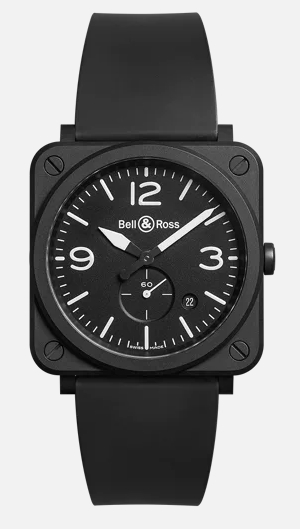
The BR S Quartz powered matte ceramic at just 39mm across.
The what I personally call their basic signature model the BR 03 (in matte black) for example is just 41mm across, though at first glance may appear larger, due in some part to the wide rubber (part synthetic fabric) strap. However, although this model ‘just’ manages to wears on a medium wrist, if you have a small wrist (mine is 165mm) I recommend the their very much neater Velcro wrap-strap which is available. It holds the watch in a much neater fashion than the standard band, so much so that I can wear my BR under a dress shirt easily.
This is a Date watch (though perhaps a little small) @between 4 & 5, great clear reading dial with excellent contrast and it’s powered by the BR-CAL.302. Automatic mechanical movement with an excellent 54-hour power reserve.
It’s also just 10.6 mm thick and made from micro-blasted ceramic and the sapphire crystal is anti-reflective. This model is rated as 100m Water Resistant.
And there are more –
In the same range they also have a Quartz version, the BR S which is only 39mm across with the BR-CAL.102 Quartz movement with an almost identical dial, but with a small seconds @6, rather than the sweep centre one. More suitable for the smaller wrist, if you don’t mind Quartz.
Perhaps for some folks, Bell & Ross may be a little expensive, but they are a high end Brand with much innovation. So what you get for your money in relative terms is certainly quality and of value. Couple that with such compact functionality and that large can be small concept, certainly a Brand to consider.
Part of the fun is to actually try one on the wrist – and once you do . . . . I warn you – you’ll probably get it.
Note – Obviously the Quartz BR S Quartz model is the most affordable compared to Automatics at around £2,200 in the UK. But I have seen the odd pre-owned model at a decent price – but do be mindful of the size.

 A nice and unusual touch is the Cabochon top on the crown in lustrous blue, the case top surface is satin brushed and the case sides polished. So not just any old case, but with a bit of style to it too. The very deep black dial background and no clutter look says it all – the classic Diver.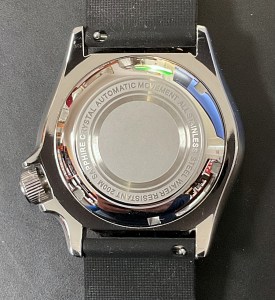







 Watch space
You must be logged in to post a comment.