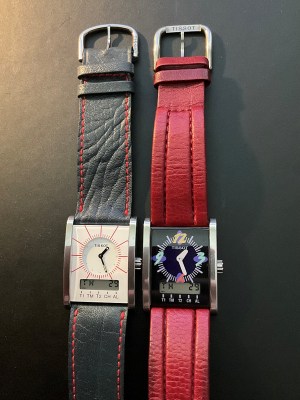
Tissot Two and Seiko

Tissot Two Timer 1986

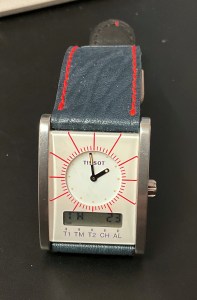
After Posting my 1986 (38 years old) dual display 7 jewel quartz Tissot Two Timer (D377) I Post here another one I have. And this is also an original first edition model, before the advent of the altered case lugs and bespoke strap configuration and four screw back plate, but with a similar but different dial layout.

As said in my first Post on the Tissot Two Timer – this model was introduced as a higher quality Swiss alternative to the often variable quality analogue/digital watches coming from Asia.
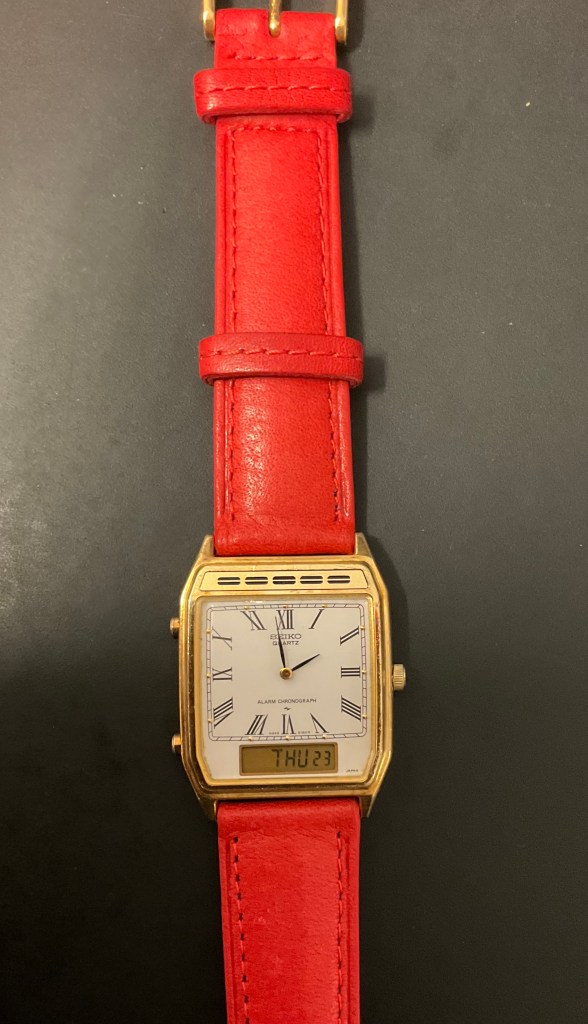
Seiko H249-5130 – analogue/digital 1981

And as Seiko were one of the major producers of this concept (plus Citizen, Casio and a few lesser brands) I thought I’d manage a quick and brief comparison between my Swiss Tissot and my Seiko H249-5130 model of the same era. Both have very similar functions and date of manufacture just 5 years apart. The Seiko 1981 and the Tissot 1986.

Both models are pleasing to the eye and both have an analogue handed dial plus a single line digital display.

The Tissot Two Timer is a high quality cased model in fine, smooth stainless steel. Sleek dimensions at just 8.5mm depth with a curved top plate and Sapphire crystal and a case width of 27mm and lug to lug of 37mm, with a high quality 22mm wide Tissot leather & stainless buckle strap.  As a neat dress watch it is pretty much perfect. (note the plain strap means it’s easily swapped, unlike its later version). The case quality of this particular watch is as new, no scratches, perfect. There are also no buttons or pushers on this model, as it employs a good sized stainless steel crown for all adjustments.

The Seiko case is of an ‘SGP’ or Seiko Gold Plate base metal, un-curved with a flat crystal. It is very thin at just 6.7mm, around 27mm case width and lug to lug of 37mm. On this model the ‘thin’ Gold plating is just holding on with just noticeable (close up) wear showing, but is still pretty good for it’s age of 44 years. The case back is stainless steel. The SGP case finish, whilst it can look good when new, does tend to wear and flake over time. And this one is showing it’s age now (Gilt has a max lifespan of 30 years?) but can’t compare to an un-plated stainless steel case of the Tissot.
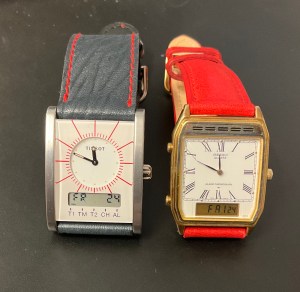
Tissot & Seiko compared – note digit separation

The Two Timer features a battery hatch (eventually introduced to Swatch) and is as good now as it was when new.  A bonus too that its rubber seal is intact, so it should still be Water Resistant to 3ATM or 30m (slightly better than splash proof, but not full immersion). Certainly good enough for a dress watch. (however, if you buy any pre-owned watch with a battery hatch – check it has the seal before getting it wet!).  And note this stainless steel case back does not open.

The Seiko has a stainless steel back, but is a ‘snap’ fit – so I wouldn’t class it as Water Resistant, but will probably manage the odd splash – maybe.

The Tissot employs the single crown system, controlling time settings and all functions both digital and analogue. It is also very smooth and precise. This Tissot single crown system is about as good as it gets and whilst there are no push buttons, the crown does have a push function.

The Seiko has a rather small centre crown on the right and 2 push buttons on the left of the case. They are also in gold tone and both pushers have a slight issue of weakened springs, which was and always has been an issue with early ‘pushers’, though so far both work, albeit a little slowly and sometimes require a few attempts.

The analogue dial displays of both watches are clear to read, though the Tissot has more contrast and digit separation is better and the Tissot dial area and display are  slightly larger overall. The Seiko gives up some of the space for the Alarm speaker, though in practice the Tissot has the louder Alarm.
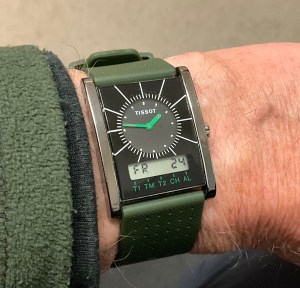
Yet another Two Timer – alternative colour set – with blackened stainless case

There’s no doubt that the Two Timer model has a sleek wrist hugging design and produced with so many face designs, it seems to have a wonderfully fresh look every time I see one. And not many models can boast that versatility apart from maybe Swatch today, which is unsurprising as Tissot was a founder member of Swatch back in the day (and still a member today).

As to design – the Seiko, whilst the latest thing back then with a dial and display combination, somehow looks a little dated now, whereas the Tissot is very much of today.  In fact it is difficult to realise the Tissot is 38 years old, basically owing to the overall design, build quality, materials and look plus comfort and functionality are quite a step up from this particular Seiko.
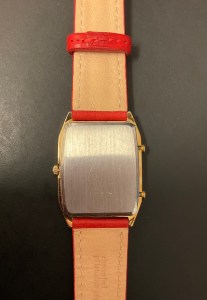
Seiko H249-5130 stainless ‘snap’ fit case back

And the Tissot Two Timer is maybe a bit of an oddity – produced to fill a gap, yet shows it’s superb Swiss heritage so well. The overall design and build quality a testament to Swiss design and watch construction. Also Tissot’s LCD digital display is clearly superior to the Seiko of this period and I know that Seiko, Citizen, Casio, Zeon and other analogue and digital Asian models in those days were not without issues.

However, considering the period, both watches have a raft of functions – such as – Home time, 2nd time or zone, Quartz movement/module, analogue hands and digital displays either linked or viewed separately, indications of Day, Date, Month, running Seconds, a Chronometer, Alarm, AM & PM indication, 12/24 hour selection. Very similar in fact.  And in the case of the Tissot, functions are controlled by a single crown, which was quite an advance on what was an Asian digital watch revolution at the time.

My opinion, for what it’s worth, is the Tissot Two Timer is and has always been a bit of an ‘under-the-radar’ model.  In fact, I’d say an understated classic, as it stands up so well even today.  And I have not come across another Ana/Digi watch of that period with a better timeless look to it.
However, as said at the start, this comparison is perhaps a little skewed, as the Seiko was made in 1981, the Tissot in 1986.  And 5 years is a long time in watch development, but regardless of the advancements, the Swiss Tissot Two Timer stands above any comparable Asian models of that time in both design and function.

And of course, model wise there are later Seiko, Casio and Citizen models around that likely better this particular Seiko H249 series, but my conclusion remains.

Just a word on the single crown control

Ever since the Crown of a watch was introduced back in the early 1880’s, it was a revolution.  John Arnold an English watchmaker first thought of some sort of  knob to replace key wound watches of the day. Then Breguet took the concept further, allowing the Crown to manage more functions.  So, the concept of looking at new ways to expand the Crown’s capability is not new, but with the Tissot Two Timer, the Crown reached new levels yet again. Especially in regards digital function, which is a complication all of it’s own making.
Anyway, whilst it all seems rather complicated – and of course, it is (a bit like an inkjet printer – it prints – but boy! it IS complicated). The trick however, is to manage the “user interface” to make it useable.

But for the watch Crown user, once done a few times – it really isn’t and there is a logic to it.
Generally – with most multifunction digital models, it is a case of selecting the function, either pulling out the crown or pushing a button will cause the digits to flash. Then either using pushers or crown, alter them to suit, then shove the crown or pushers back to the neutral position.
But as with all of them, unless you wear the watch frequently, it’s easy to forget what to do.  And in fact, there are many modern digitals today that can get you frustrated.

On this Tissot there is a first and basic procedure that starts it all.  And this is whether you’ve got one that’s displaying wrong or you’ve just changed the battery.
First thing to do – is synchronise the analogue and the digital displays.

And if you remember this first bit, then usually you start to remember what you’re doing (basically get things flashing, adjust and so on as above).

So, to synchronise
And in this order –  we first want a blank digital display by simply turning the Crown any way.  Once the display is blank (off), pull OUT the Crown – this switches ON the time display. Then turn the Crown (this moves the hands – so you move them to match the digital time). Once the hands and the digits show the same time, simply push IN the Crown again. You are now synchronised!

Now you can set the correct time – With the Crown IN as you’ve just done, turn the Crown again until T1 on the display has a small cursor line below it and a digital time indicates. Pull out the Crown and the hours and minutes flash – and turn it – this time the hands and the digits will move together. (moving the crown slowly moves it minute by minute and FAST motors the hands quickly – like in hour jumps!). Set the correct time approximately, OR if you need to set it to the second, the seconds display will flash for another minute to give you time to set it exactly to the second. Then push in the Crown again.

And that’s the very basic bit , or what I usually remember bit, done!
Personally I don’t set it ‘to the second’ – let’s face it I’m retired! who needs seconds! Roughly to around the minute is fine for me.

And for the rest of the adjustments like Day, Date, Month, blah blah blah – get the instructions out! Then forget it all for the next 4 years or so until the battery pegs out! Then hopefully you might remember the basic bit – (blank display, pull out the Crown and move ”em all at once – yes?)  the basic bit! above – then for the rest of it, you might have to find the instructions!

And finally – the best Tissot Two timer instructions I’ve found are here.
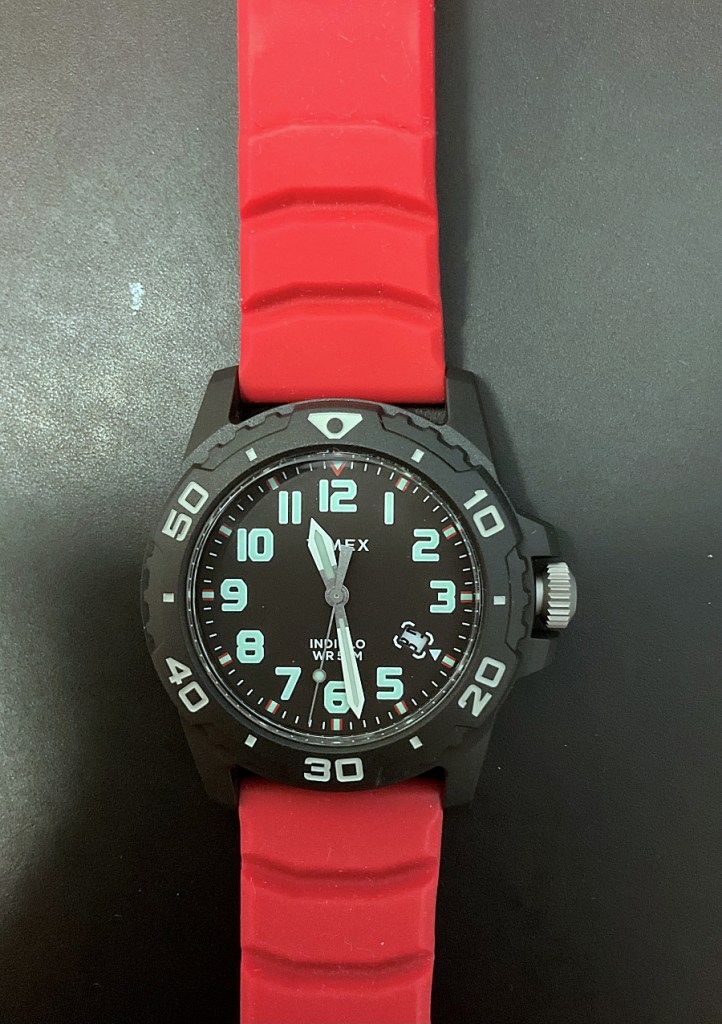
Budget Timex Daily watch?

Always nice to have a new Daily Beater – that is a watch you can wear everyday, easy to read, luminous, good size, dependable quality, tough, decent Water Resistance. One that also indicates the Date is always useful.  Now, I have had a few daily beaters over the years and I’ve still got them all, because there as easy to slip on as a pair of socks or gloves. They’re one of those every day things you can take for granted.

Casio Daily Beater – TM61000 C3

However, I might have to question this Timex TW5M61004. It has been called a ‘Main Street’ model, perhaps another way of saying Daily Beater, who knows, but this is the model number which is more important to know.
A friend who recently got himself one is actually very pleased with it and he showed it to me and asked my honest opinion.

Always a tricky when that happens, isn’t it?

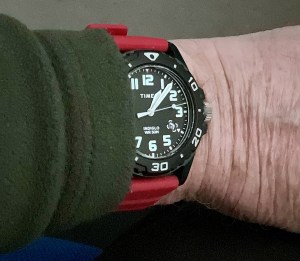
Well, it’s a Timex Quartz movement, so that should be OK.  I do like the size of it at 42mm diameter and it lies flat on the wrist as it’s  just 10.5mm thickness. The case is resin with the typical Timex stainless steel 4 x screw back, which has always been dependable. It also manages a 50m Water Resistance and it’ s NOT expensive.

Casio daily beater on the wrist – neat size – looks good.

It comes with a conventional pin buckle coloured silicon strap in red or black – this is the red one and I agree with him, it looks great and for once not too stiff (so many “rubber” straps at too stiff these days).  And being attached to conventional spring-bars, it’s easy to change for any strap you wish.  So, not a bespoke affair which is a real plus in my book. It’s also a quick release type which is very useful as no tools are required to do a swap.  So, for this strap, I have to give it a +100% rating – as it is very well made, flexible and very comfortable indeed. In fact, I’d go as far to say it’s one of the most comfortable straps I’ve worn from Timex.

So far it’s all good.

Now, while this model looks like a ‘diver’ model, it isn’t – and Casio do not describe it as such. But it does ‘look’ like one and is pleasing to look at. Mildly male orientated I suppose with the dial, hands and numerals design, though of course the distinctive bezel does NOT turn.

Some might say this is terrible, but it isn’t a diver, so it’s not – in fact there are more customers of ‘diver’ watches who don’t swim or even to go near water, so hardly divers? So, most buyers won’t bother and if nothing else it looks good and maybe quite handy for a ‘quick glance’ time check for 10 or 20 minutes.

The large diver style hour and minute hands are OK and there is also a centre seconds hand, which is always handy to have.  But and maybe this is my first ‘but’.
The seconds hand is grey coloured which I find at certain angles not that easy to see, even though there is a seconds ‘spot’ at the sharp end. To me, if you have a centre sweep seconds hand then I want to see it clearly, otherwise what’s the point.
The main hands and the numerals are according to the spec – luminous – and they are, but only just and certainly not really what I would consider luminous.
These are too faint and just maybe if you’ve got your glasses on in the dark, then hopefully you might see them. For me – simply not good enough.

Ah! I hear you say – Casio has Indiglo – to which I say – exactly!

I mention this because Timex have also incorporated their “Indiglo” night light system in this model – though for me this is a system that has never won me over.

It basically allows you to push in the crown and the entire dial lights up in a sort of blue/green glow and the hands and numerals are then backlit, appearing as a dark silhouette idea. Now, I have always found that the glow is often so bright, it sometimes swamps out the silhouetted numerals.  So, this is not my favourite system – I would much prefer really good luminous hands/numerals etc. every time.  And OK and apologies to my friend, but you asked – and that IS my opinion.

The rest of the watch ensemble is pretty well made, the resin case is tough, the large crown easy to use to quickly set the hands and so on.

However, another small niggle is the Date, which is indicated in a small window @4 – which in this instance could definitely be bigger, as the window recess is too deep and casts a shadow and not that easy to read.  And double digit dates without a 1, can appear crowded, so really not that easy to read at a glance. If the window was a fraction larger and the date wheel closer to the dial, then it would be much better.
I would also note the date transition period (when it changes over at midnight) is one of those long ones, so for maybe 30/40 minutes the window is in-between dates – and with this small heavily recessed date window – VERY tricky to make out.

Clever little strap case notch

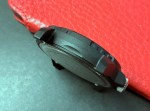
A nice point I noted was that between the lug bars, where the strap fits, there is a notch cut into the case, which allows the strap to sit snug against the case, without the case curvature getting in the way.  This is a neat idea rarely seen and it’s a good idea.

As said this watch is Quartz and powered by the easily sourced CR2016 battery, so should be good for around 5 years or so.

In summary then I would have to say – I quite like it as a basic Timex which is OK and is not going to break the bank.  And yes, it’s probably perfectly fine as a daily beater, though I would prefer also as a nightly beater with better luminous hands/numerals etc.

But on the other hand it IS an extraordinarily comfortable watch on the wrist and my personal gripes probably won’t bother my friend in the slightest or another wearer, unless a picky old guy like me.

It is what it is – and so am I!  After all he did ask!

A clear winner?

Checking out digital watches over the last few weeks, it is very noticeable that so many of them are over-complicated. Displays (some not very good) that are really cluttered with so much information they are difficult even to read. Certainly not at a glance, which is how I’ve always checked a watch and usually because at that moment I simply want to know the time.

This got me thinking. Amongst all these offerings, could I find one that clearly and simply, could show me the basics – and at a glance.

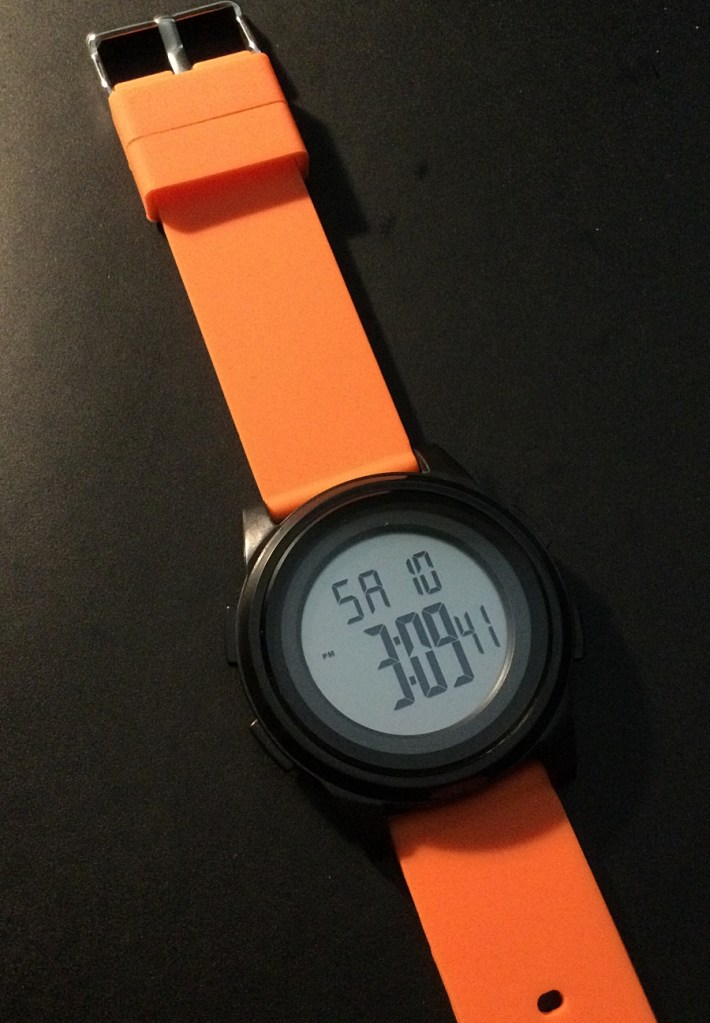
SNE 1206S Ultra Thin Digital watch – and it’s very excellent display.

First I decided what I wanted from the watch. What are my personal requirements?

Well, the first and foremost one for me is simple – CLARITY. I want to be able to read the damned time – without too many display distractions.

So, my requirements –
1) – It has to be easy to read the time.
2) – The display needs good contrast, be uncluttered and show me the basics clearly – Hours, Minutes, Seconds, plus the Day and the Date.
3) – I would like to be able to read the time in the dark.
4) – An alarm would be useful.
5) – It has to be easy to operate (without referral to instructions).
6) – Good quality construction, sensible sized case (without the ‘macho’ so-called ‘military’ silliness), plus a conventional strap (not a bespoke affair or a bracelet).

Easy sit up Alarm clock!

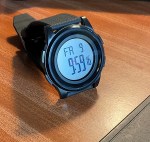
(Note – with a conventional strap & pin buckle, it’s easy to sit the watch up on a bedside cabinet as an alarm clock – see image)

Armed with my list I started my trawl of digital watches – and there are literally many, many hundreds. First I start eliminating the expensive ones, the over-complicated, cluttered displays and those with model specific straps and of course the poorly made ones.

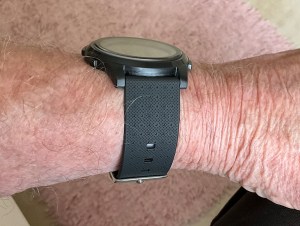
Sits flat on the wrist
Changed look with a quick/fit soft silicon colour strap.

After all that, I finally, finally came up with this one – the SNE 1206S Ultra Thin Digital Watch

It is Chinese, as many, many of the cheaper digitals are, but this one meets my requirements pretty well.

The Brand is SNE, though there are so many ‘brands’ in China, it could be a one man band, a family or a small assembly house, who knows? I suspect this is from a small outfit, who buy-in bulk parts, importing where necessary, case locally and then export the assembled product. Using Amazon you can supply the world!  This particular model was in an Olazone box with Panda logo, as the watch back (I’ve also seen a ladies white cased version).  And there are other sellers marketing this watch or similar with slight differences such as display data, so there should be one to suit almost anyone!

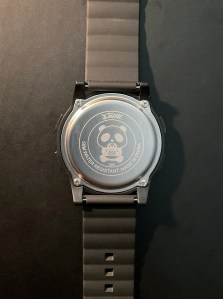
4 x screw stainless back plate & 5atm Water Resistance

On this model, the case is PU resin, well made with a 4 screw stainless back plate, claims 5atm Water Resistance, though personally I would use this for everyday use, splashes and so on. Which is OK for me. The case is 43mm diameter and as advertised, Ultra Thin. It measures just 9.5mm. And being so flat on the wrist it looks good on smaller wrists. This model is also extremely light at just 36gms.

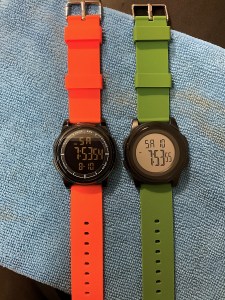
The thin flexible PU strap is OK, if a little bland and fits to the case with conventional spring bars. This means ease of changing to most watch straps of your choice if needed. (Note – not the first time I’ve said this, but many models have hard resin fitted or bespoke straps and difficult to replace, if at all – so, here’s my alternative in orange – certainly changes the look and it took me 43 seconds!)

A hard (probably imported) scratch proof acrylic crystal allows full view of the excellent and clear module display.

I particularly like the ease of reading, what I consider ‘at a glance’ – the main display of Hours, Minutes, running seconds. Plus the Day and the Date.

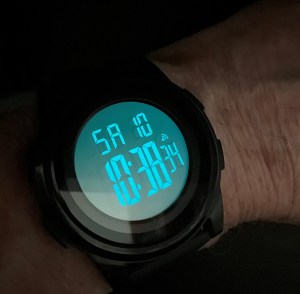
Excellent EL back light – for low light/darkness.

Having retired many years ago and no longer working, I never know what Day it is, or for that matter, the Date.  Simply as their relevance is of no real importance anymore.  (retired folks may well understand what I’m saying).
So, having both those displayed clearly is ideal for me.  And conversely, I don’t need the watch to indicate the month or the year, because for some reason I never seem to forget these!  And if I didn’t know them, well, I’ve got other issues!

So this uncluttered and excellent high contrast display, shows just what I want or need. Very clear and the EL back light for low light/dark use, is exceptional.

The watch is quartz powered of course and the battery required is the relatively large and easily sourced CR2016.

The functions are pared down basically to what is useful to me –

Mode pusher (B) – lower left – each press selects each display in rotation –

1) – Main Time, Day and Date display, with large Hour and Minute digits with running Seconds.
2) – Alarm – with snooze and hourly chime (selectable).
3) – Stop Watch – with split time (upper (D) pusher for start/stop and lower right (C) pusher for reset)
4) – Settings – adjusts with upper right pusher(D) and lower pusher (C) selects each item in turn.
Note – for the EL back light – press upper left (A) pusher. To instantly alternate 24hr/12hr time, press upper right pusher (D) when in Main display mode. Super simple.

Note that I haven’t mentioned setting the year and that’s because you don’t. The internal module is Auto Calendar. Once you set the Day and the Month, the module does the rest. These are usually programmed until 2099, so no worries on that score.

Another plus for me is, the watch and pushers are quite discreet, with no clutter on or around the dial.  If you want to liven it up, the best way is to change the 22mm strap for a coloured one (as shown above in a soft orange silicon). 

However, the real clincher is the price – this one just £17.99 with free postage from China and two weeks to arrive. Some of the variations of these models can cost even less, so it’s well worth checking them out and if you are into watches, then this both fun and cheap! However, this time my clear winner is the SNE as above.

GoldenHour GH1313 Thin Digital

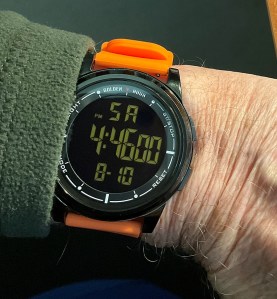
Another model worth looking at  – The GoldenHour GH1313 with alloy case and different data display module.
This is slightly heavier at 59gms, but still a light watch. It has a different module and displays Time (Hrs, Mins, running Secs) plus Day, Date and Month (note the month precedes the date – not UK style and cannot be altered).

This display type is also quite clear, though in low light it can’t match the SNE watch above. However it also has an EL back light which is excellent, so not an issue. The pushers positions on this model are identified on the dial circumference, but I note it also has hour and minute  indices which are irrelevant, as this is not an analogue watch with hands!
Perhaps the information ring is used with other non digital models in their range? Who knows.

GH and SNE digital models with colour straps – look good.

I fitted a quick release orange strap just to see how it looks – the original came with a very thin, green coloured flexible PU strap, but of course easy to swap around.
Once again this is a rather well put together digital model at a very low cost – worth a look (Amazon UK).

Colour straps can really liven up the often dark Digital models.

I’m very encouraged after trawling through so many cheaper Digitals, not expecting to find really decent watches. So, something of a surprise that there are a few that appear to get the basics right. This won’t be the last time I have a look at what’s on offer – and it’s fun!

A growing number of extreme low cost Digital models have been appearing over the last year or so. These models are challenging the better known Brands, such as Casio, Citizen and Timex. I’m unsure if these are genuine ‘Brands’ or Pseudo brands, as they seem to appear almost weekly in different guises and obviously utilise a variety of digital modules. Many offer the same features, or the same or similar case and all are very cheap.

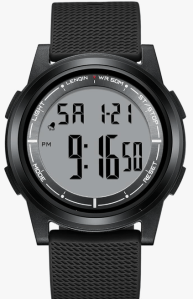
‘Hanposh’ or ‘Lenqin’ Digital model – same case, slightly changed module/dial configuration.

For example – This is a very similar model marketed by ‘Hanposh’ with yet another name on the dial ‘Lenqin‘ and a slightly different module (shows the Month) and I recall it was even cheaper!

Buyer beware – So, whilst it all sounds great for the buyer, I’d caution that these products are basically just assemblies. They don’t appear to actually be watch Producers as we’d know them, so no real factory Quality Control and possibly no meaningful Warranties.  Also many of the descriptions (especially on Amazon) can be incorrect, such as dimensions, features and functions (as if even they get mixed up with the parts they assembled). And true Water Resistance (note – the term “water-proof” in regards to watches is never used) claims can be dubious to say the least. So as this paragraph title says – Buyer beware!

However, that said, I have two different models from different named suppliers and so far, they are both working as they should – but that’s the thing in this digital game, you’re either lucky or you ain’t.

But for me this time – this one is a winner.


Update Genta

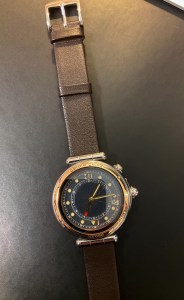
Gerald Genta G3268.G Bartolomeo – Alarm (Omega 980 19J movement) back from service and looking good.

This was my first Gerald Genta and after taking it from it’s display resting place (apart from a couple of weeks annually that I wear it) I thought it could do with a bit of a service.  So, a month or so ago I sent it away for a service check-up and am delighted to say it’s back.

My Genta Bartolomeo (image updated April 2024)


My model which features the Omega 908 Automatic alarm movement from sometime around 1995, so bang in the middle of Gerald Genta’s best production period – and as I’ve discovered since, this particular model is rather rare. The 980 movement itself appeared first back in 1968, used in Seamaster models and the Memomatic of 1970.

Only a very few of this model have been seen at auctions in the last 15 years and this one changed hands at least once before it got to me.  I love it as it shows off the Genta style and was my first introduction to the Brand.

To recap – this a Gerald Genta Bartolomeo Alarm Calendar watch with slate dial and centre rotating disc wheel, gold filled numerals and luminous markers, gold hour, minute and seconds hands, plus the GG logo in gold on a red tipped Alarm pointer, which is on the central disc. This points to the hour and the half hour and enough space is on the index for pretty accurate setting of the Alarm time.

The Alarm function is indicated by a central rotating disk and operated and set using the upper Crown.

The time is set by the main/centre crown @3.

The mechanical Alarm is activated by the upper crown (between 1 & 2) when pulled out one click.  With the upper crown pulled out two clicks, it disengages the main crown from the hour and minute hands. This allows the main crown to then move the Alarm pointer hand (disc) instead. Pushing in the upper crown, re-engages the main crown to the hour and minute hands, as normal. A rather neat system.
The alarm is mechanical and the sound is produced by a small hammer striking a gong attached to the movement. It is what I would call (and Omega said this too) a discrete sound and rather nice in comparison to the modern digital ones. I find it really quite good as not only I can actually hear it (not so with digital alarms as I’m at an age now where I’ve lost frequencies) but plus, it has a bonus of a gentle vibration as the hammer hits the gong.

The watch (although automatic) can also be manually wound using the main crown.

Also of note is the fact this Alarm does not require winding – this is done automatically by the normal auto movement (one winding barrel suffices) and is operational again within an hour of striking, with normal wrist wear.

This is almost the same as the Omega Memomatic which shares the same 980 movement. The difference being the Memomatic has a second disc on the dial which has inscribed minutes which allows it uniquely to be set precisely to the minute.

The dial layout also features a clearly defined large Date between 3 & 4 o’clock and there is a handy quick set date adjuster, just below the 2 o’clock position on a small raised case mount, in the form of a small pusher.

The bronze coloured bezel is secured with 4 screws.  The crystal is Sapphire and slightly domed.  The watch case is stainless steel, as is the back with securing screws. On the back is the serial number & model details inscribed plus the brand logo.  The Gerard Genta logo is also featured on the red tipped Alarm pointer, which form part of the central slate disc on the dial. (Note – some Genta models had bronze cases, but this one is stainless steel).

My Gerald Genta still has the original T bar leather strap and the original signed stainless steel double deployment clasp. However, it is worn somewhat having been altered for different wrists in its day, so I may have to replace it at some point. Case diameter is 40mm ex. crowns and is 13mm thick.

The value of this watch is certainly higher today than when I bought it at auction and as said, very, very few of this model have appeared for sale.  So, I’m really pleased with what was at the time, an impulse buy!

Gerald Genta watches are seen as an iconic brand and this one started off a small personal collection of the brand – though this, as it was my first, is my favourite.

Update –
(April 2026) – Finally had to replace the strap & deployment. The original was a fine leather sandwiching a mica inner at the watch lug fixing with tiny screws fixing the strap to the lug.

This was too brittle and falling apart.  Unable to source an original, I replaced it with very fine Rochet lamb leather 16mm strap with a high quality stainless steel buckle, which matches the case lugs.

Note the Genta case lug uses a solid strap bar which actually allows a fine closed strap to slide in from one end. The screwed strap/lug pin is slid through the strap and secured using a small thin flat head screwdriver. Very neat.

Not a great fan of some deployments as they tend not to fit snug enough for me, so for me the result is better than the original – see image.

Bell & Ross

So, why do I like Bell & Ross watches?

They are a relatively recent company, a French manufacturer, based in Paris, with their manufacturing facility in Switzerland. They came into being in 1992, when they used the German manufacturer, Sinn (I liked their U1 1010 Diver (though big) and more recently the Sinn 105 St Sa UTC) for initial production, but in 2002 became their own man so to speak, when Bell & Ross really came into their own.

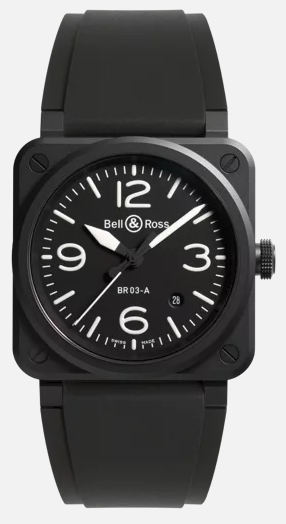
The BR 03 – not as big as it looks at just 42mm across.

Their philosophy was and is simple and according to their own literature, their watches meet four basic principles: legibility, functionality, reliability and precision. They are also known for the BR series of models which were square cased. Mostly based on aircraft instrumentation for style and legibility, they soon became favourites with pilots, divers and other action occupations and of course extreme sports lovers.

But for me I like them for one main reason (amongst others) – because they manage to make what appears to be a large watch, with great clarity and readability – appear small.

And that’s no easy feat, especially with a square case format, but for myself with an average wrist size, it means a great deal. And most of their conventional round cased watches are a sensible size too.

They also use their own excellent Swiss automatic movements, such as the latest Br323 with an astonishing 70 hours power reserve and they use ground breaking luminous features, which have to be seen (in any light).

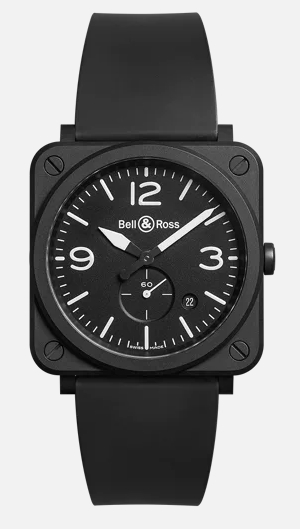
The BR S Quartz powered matte ceramic at just 39mm across.

The what I personally call their basic signature model the BR 03 (in matte black) for example is just 41mm across, though at first glance may appear larger, due in some part to the wide rubber (part synthetic fabric) strap. However, although this model ‘just’ manages to wears on a medium wrist, if you have a small wrist (mine is 165mm) I recommend the their very much neater Velcro wrap-strap which is available. It holds the watch in a much neater fashion than the standard band, so much so that I can wear my BR under a dress shirt easily.

This is a Date watch (though perhaps a little small) @between 4 & 5, great clear reading dial with excellent contrast and it’s powered by the BR-CAL.302. Automatic mechanical movement with an excellent 54-hour power reserve.

It’s also just 10.6 mm thick and made from micro-blasted ceramic and the sapphire crystal is anti-reflective. This model is rated as 100m Water Resistant.

And there are more –

In the same range they also have a Quartz version, the BR S which is only 39mm across with the BR-CAL.102 Quartz movement with an almost identical dial, but with a small seconds @6, rather than the sweep centre one. More suitable for the smaller wrist, if you don’t mind Quartz.

Perhaps for some folks, Bell & Ross may be a little expensive, but they are a high end Brand with much innovation. So what you get for your money in relative terms is certainly quality and of value. Couple that with such compact functionality and that large can be small concept, certainly a Brand to consider.

Part of the fun is to actually try one on the wrist – and once you do . . . . I warn you – you’ll probably get it.

Note – Obviously the Quartz BR S Quartz model is the most affordable compared to Automatics at around £2,200 in the UK. But I have seen the odd pre-owned model at a decent price – but do be mindful of the size.

Something about vintage – Trebex

One of the nicest watches to wear is this 1948 9ct gold TREBEX, with it’s superb overhung centre sweep second hand and one of the most unique pointer styles I can remember seeing on a watch.  I have heard this particular model was referred to as an excellent “Doctor’s” watch In Japan, no less!  Perhaps not officially, but as the seconds index is fully blocked in, coupled with the wonderful seconds hand made pulse timing very, very easy. It IS however VERY rare indeed to find it.

There is some confusion about the origins of this brand, though the horological trade mark index (the Mikrolisk data web site) does have it listed as a sub brand of the Milex Watch Company. They were registered in Switzerland in 1938 along with Elem under their trade mark appropriation data.

Swiss Trebex 9ct Gold Gents watch 1928 vintage.
Swiss Trebex 9ct Gold Gents watch 1948 vintage.

The watch case is 34.5mm diameter which is quite large for the period and had what was termed as “fluted” or “fancy lugs”.

The hand wound mechanical movement is an A S Schild 17 jewel calibre 1351 and runs perfectly and in fact a very good time keeper.

I fitted it to a green lizard strap which seemed to suit it complete with a rounded vintage gold buckle and it is a delight to wear and often to be seen on my wrist of an evening.

No idea of the value of this watch at all, but it is what it is and so far I’ve not come across another with this particular dial. I have found only one with what appears to be a very similar case including the “fluted” lugs, but not with the same seconds/minute closed index OR that amazing seconds pointer hand.

So, to me it’s worth having basically for it’s apparent rarity and the fact, I like it very much and often wear it.  And that surely is what it’s all about.

February 2025

On reflection I wonder if the dial has been redone at some time. And the hands maybe retro-fitted and not for this dial size. I suppose when you look closer, the minute and seconds hand overhang the printed dial index considerably.

Just a thought – but whatever – I just love watching the seconds hand move smoothly round the dial – quite fascinating.

Something about vintage – Lord Elgin

The main reason I collect vintage watches is simply because of their look.  And yes, generally they are smaller than today, but not to be confused with ladies models, which when these were produced were very much smaller. But that doesn’t mean they look feminine on a gent’s wrist, not at all, but it does mean that they are amazingly comfortable and to my mind, look great.

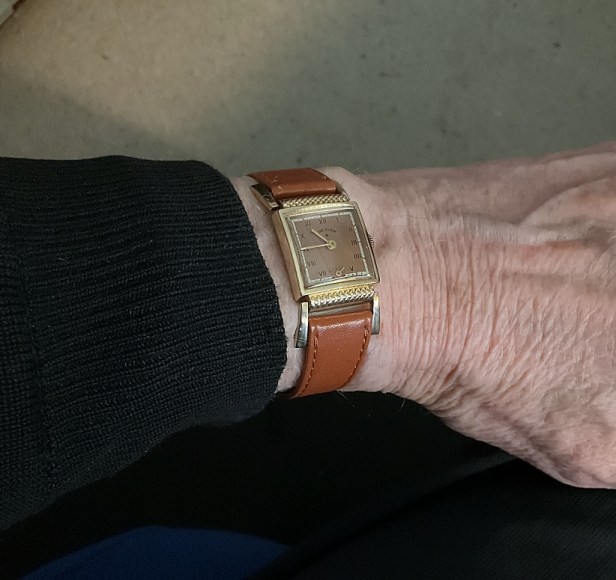
Take this 1950 Lord Elgin, which is not quite as old as I am, but even years old it is still working perfectly, keeps reasonable time and has a 50 hour power reserve that lasts easily from day to day.

Lord Elgin vintage model from 1947.

This model has the 21 jewel Cal. 670 manual wind movement, adjusted to 3 positions.

It has a lovely copper dial with gold hour and minute hands, plus a sub-seconds dial @6 also with a gold seconds pointer. A minute index is nicely configured around the dial and the detail is really very good indeed.

This model also has wonderful fully articulated  “fancy” lugs (a cute and correct quaint term of the day) with nice engraved work at the case ends. The watch is in a Wandsworth Gold Filled case and the entire look is excellent, as is the condition.

Note the “adjusted in 3 positions” – this means that when produced, it actually had an accuracy goal right from the start.
Many watches are not adjusted at all for accuracy, but for these vintage watches it was a good thing.  Different levels of accuracies could be graded, up to 5 positions and this means simply that the watch was tested (duh!) in different positions, such as crown down, crown up and so on. Because the action of wearing on a wrist, the watch ends up in many different positions, so it shows an attempt has been made right from the start, to minimise inaccuracy from a positional point of view at least.

There are actually two other main factors affecting accuracy, such as temperature and then the mainspring effect, or “isochronism”, which is caused by the spring unwinding as it runs. For example it might be 2 or 3 seconds fast in the morning, but later in the day maybe 3 or 4 times that.  So to try and regulate that “rate” is another way of improving accuracy.

But we know from the movement marking, this watch at least has had some positional adjustments carried out, which is a good indicator of decent quality movement wise.

However, the main point of this Post is much more basic.

I simply wanted to show how good a true vintage sized watch can look on a gents wrist (the gent being me!) 😉 and I think it looks great and it wears great, which was and is still the main reason for my vintage watch collecting.

Note – The dimensions of the watch are 21mm across (add 1mm for the crown) x 45mm total lug to lug including articulation (the case is actually 27mm lug to lug) and the curved case is approximately 7mm thickness including the high domed crystal, which is a feature on many vintage watches of this period.

I’m going to do a few more of the vintage watch Posts, since I re-organised my watch storage ideas recently. I have a pile of leather strapped models waiting to be re-located in new cabinets and I’m cataloguing them too, so they are to hand.

Divers – Part 2

I feature another cost effective Diver’s watch, this time from Rotate North.  A relatively new Brand based in Belfast, who offer cost effective dive capable models for tough duty, coupled with general day wear.

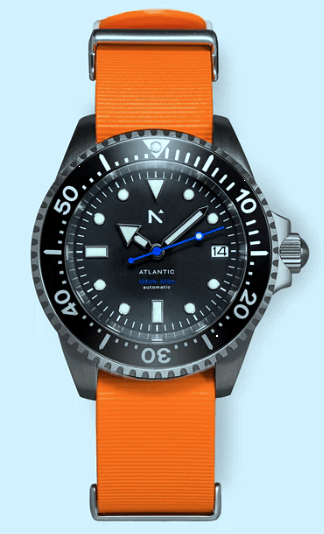
Rotate North “Atlantic” diver watch

My preferred model is the Atlantic model which has a 300m Water Resistance rating, so more than enough for the casual scuba diver. The watch also isn’t too large in diameter or thickness which is always a consideration for me.  It then doesn’t look out of place if used for every day use.

I like that the dial is relatively uncluttered, uses Super-lumiNova on hands and markers, a date window @3, sapphire crystal and a well formed protected screw down crown. It also features a unidirectional bezel with luminous datum and a solid stainless steel case.  It has been knurled sufficiently so turning it is relatively easy, which is quite important and often overlooked by folks looking at watches for diving.
In standard form it appears to comes with an unusual rubber 20mm wide NATO style watch strap. The watch is produced in Germany.
The movement is the well respected Seiko NH35A, 24 jewel Automatic movement with 41hr power reserve and has a centre sweep seconds hand with luminous dot.

The choice of this movement is a good one, as it’s a typical Seiko work horse movement, very popular in the range, with good accuracy and reliability and it can also be hand wound.

Watch dimensions are around 41mm width (46mm incl. crown), which is a sensible and manageable size and the case is 15mm thickness, so a strong solid watch.

Rotate North have two other dive style models  –

The Arctic – with a 500m rating, slightly larger at 43mm diameter (48mm incl. crown) and thicker case at 16mm, and an unshrouded crown is @4. My preference is a protected or ‘shrouded’ crown. The case is also thicker so could be a bit chunky for everyday wear.

The Tempest – similar size to the Atlantic but with unshrouded crown @3 and it has an additional 24hr index on the dial .  My preference is without 24hr index, as it adds dial clutter and again I prefer a shrouded crown.

A note on Bezel knurling –

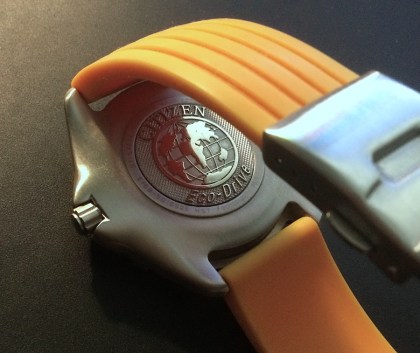
Citizen BN0000.04 Eco-Drive 300m Diver. Compact and does what it says! With great bezel numerals makes for absolute clarity.

Take my Seiko 5 Sports Edition model – looks great in most aspects and yes, can certainly be used for diving, but if for scuba-diving, then knowing how much air time you have left is fairly important. And the bezel knurling on the Sports 5 is not well defined enough to make it easy to set, it’s just too smooth.
Maybe a bit picky, but I’m just saying . . . . . Great watch for a bit of snorkelling and general swimming if you don’t really need the bezel feature.

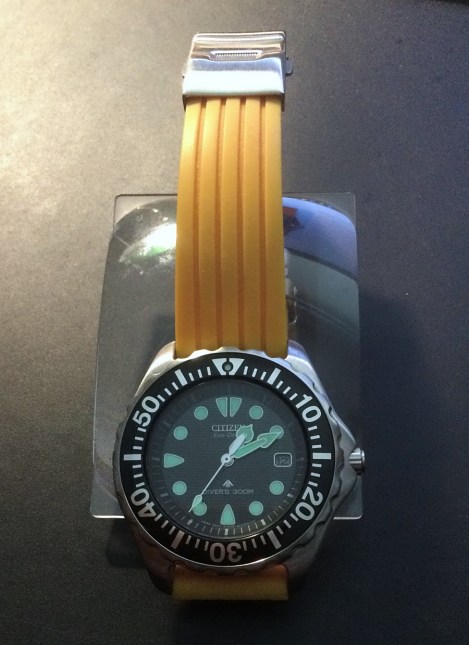
An oldie but goodie is the Citizen BN0000.04 Diver’s model is a classic I’ve had for a few years now.  An Eco-Drive movement with Date @3 and with an after market silicon deployment strap.
I love this model as it’s the most compact Diver model I’ve ever seen. It is rated at 300m Water Resistance and features a unique shaped mould like satin finished steel case and well shrouded crown.  On top a great contrasting large numeral unidirectional bezel with good knurling so is easy to turn.

Citizen solid sealed body Diver. Note shrouded crown.

Needless to say as it’s Eco-Drive, it’s fully automatic and powered by Solar, so pretty much goes on forever. The dial is very clear to read, with large and very luminous hour and minute hand plus a sweep seconds with luminous dot. The hour markers are also large, well defined and very luminous. In fact the luminous quality of this model is exceptional which is perfect for this relatively small dial.

This is what I call a no nonsense watch.  Very well constructed, smooth and sleek on the wrist and very tough indeed. Case dimensions are around 40mm width (43mm incl. crown) and only around 11mm thick at most – as I say, a very neat watch – and the reason I got it in the first place. In fact, it is a brilliant compact Diver and again and this time from Citizen, a model that is just right.

So if small and perfectly formed is your thing – then this is your watch.

Is it still made currently? – I have no idea, but it should be, because it’s very, very good.

Divers part 1 – Quartz or Auto?

And that’s the thing with Diver’s watches – they look darned good at the poolside or even at the dinner table and maybe if you’ve bought clever – in the Sea too.

Often they’re oversize or at least the hands and numerals are broad and bright too.  Hopefully they glow bright in the dark (or should do) of solid construction and will shrug off damage and it goes without saying, they MUST be water resistant to hundreds of meters depth? Or do they?

Back in the day when I used to scuba dive, the deepest I got down to was around 30 odd meters and even then, rarely, and this when I was much younger and my lungs still worked! 😉  Much deeper than that, you were into decompression territory, which was not my game at all.

So the first question is – What depth rating do you really need on your Diver’s watch?  I mean, I’ve seen a few that manage many, many hundreds of meters and no, you don’t need one of those, as these are really specialist devices and a bit more than a scuba holiday, splash around the pool watch.

For light recreational diving I reckon (my opinion) a decent dive model should have a minimum of 100m, though my preference would be 200m.  These will easily take care of most recreational dives and the odd nut. They will certainly allow pool work and the odd sea adventure for the non professional.

The second question is – Mechanical or Quartz  – my opinion is – either.

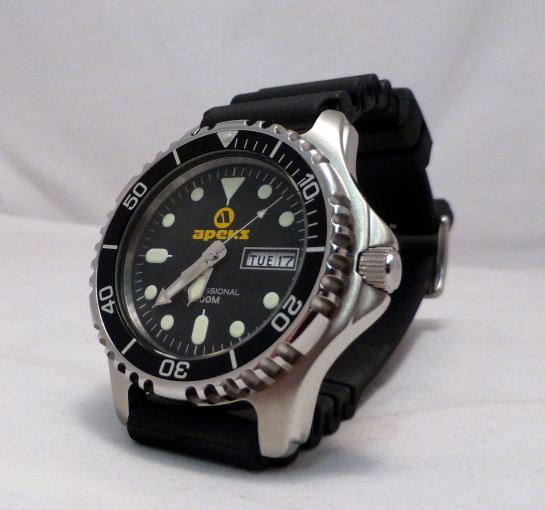
One of my favourites is my old Apeks Professional 200 AP0406 (quartz) – it’s proved itself for years personally in scuba situations – It was very inexpensive and has never let me down.

Apeks AP0406 Mens 200m Professional Dive Watch

Great luminosity, very clear to read above and below and it’s a very neat watch too.
Note – the knurling on the bezel is serious, nice and figured and easy to grip.  The bezel is unidirectional, well lettered and with good contrast, so you can easily estimate how much tank time you’ve got left.

Battery life is around 3 years and luminous dial qualities are excellent (note – I have more in depth – pardon the pun – Posts on this watch somewhere on the site)

So, how do you figure when the battery is about to die on you is to use common sense.  I swap my battery every 2 and a half years IF I’m using the watch as intended.  If I’m using it simply as a daily beater, as I do with the Apeks, then every 3 years, before it stops – it’s not a matter of life and death.

For me, these days and basically as a daily wear watch, Quartz has it’s attractions, price of course being the main one, because this watch was really NOT expensive for what you get. And for my scuba diving, such as it was, it has proved itself time and time again.

However, if I wanted an alternative to quartz, I’d have to definitely consider as my very first  Automatic movement Dive watch choice – I’d definitely (and I have long ago) pick out the Seiko.

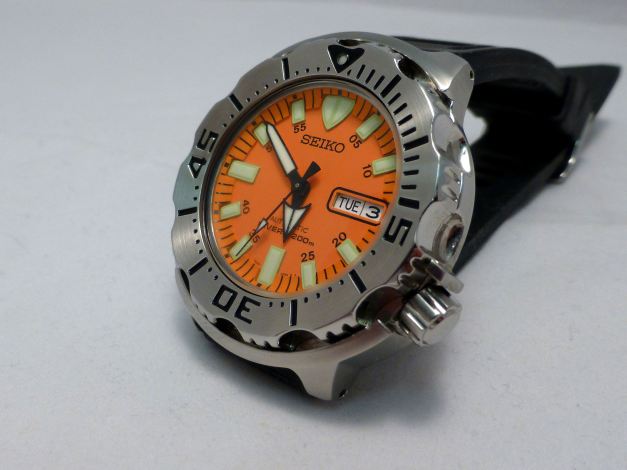
Specifically, the Seiko Orange Monster, which is another VERY popular recreational diver model which I also own and use.

It features an Automatic (not quartz) movement and basically as long as I’m moving my arm occasionally, my Orange Monster ticks along just fine.  My Monster is a Mk 1 and features the 21 jewel mechanical automatic Seiko 7S26 movement and with the additional Day and Date window shows it’s versatility as a daily wear and for me the day/date is useful, as being long retired I rarely know what day it is! The day and date are easily altered on the first click of the crown. This movement is non-hacking (in other words when you pull out the crown the seconds hand keeps going, as opposed to stopping the seconds hand on say 12, for precise time adjustment). For me I prefer non-hacking which may actually add to reliability and the 7S26 is without doubt, a VERY reliable movement.

Note the Monster also has a very efficient auto winding (rotor) mechanism and if you haven’t worn the watch for a while, it basically only requires you to waggle it in a horizontal manner a minute or two, wear it and it’s pretty much set for the day.  Fully wound it easily manages more than 40 hours. In practice my one here managed 45hours!  A really great practical watch.

Seiko Diver (Orange Monster) Mk 1 – When they made this one, they got it just right!

Later models (Mk 2) feature (12 years after mine) the 24 jewel Cal 4R36 auto movement could be manually wound and I understand the Mk 3 had a 6R15 movement with increased power reserve of 50hrs.  Apart from these changes, the Monster has only received minor cosmetic alterations since it first came out over 2o years ago – a testament to a model that got it absolutely right first time.

I certainly like the Monster as it’s VERY bright, so good to read underwater and low light and is built like the proverbial brick outhouse!  Big heavily figured bezel, large clear dial, great luminosity and solid construction, make this a very, very popular choice for many.

For me either of the two models featured here would probably still be my starter model if looking for a versatile day/diver watch or even taking diving just a tad more seriously.
They both do what they say very well, be it Seiko quartz or Seiko automatic, as both movements are very reliable and difficult to beat and regardless if your first diver or not, these two will last a lifetime and more.

Now I know some folks will say I have featured these before and that is true. But there are watches that for many reasons have proved to be so right, it’s always worth introducing them to new audiences. So no apologies from me.

But there are many others out there these days and maybe I’ll find another one that manages to get the basics right.

And that’s important – and not always the case, so I’m hoping there are more around and if so I’ll feature it or them on a future Divers Part 2.

My Tissot Two Timer

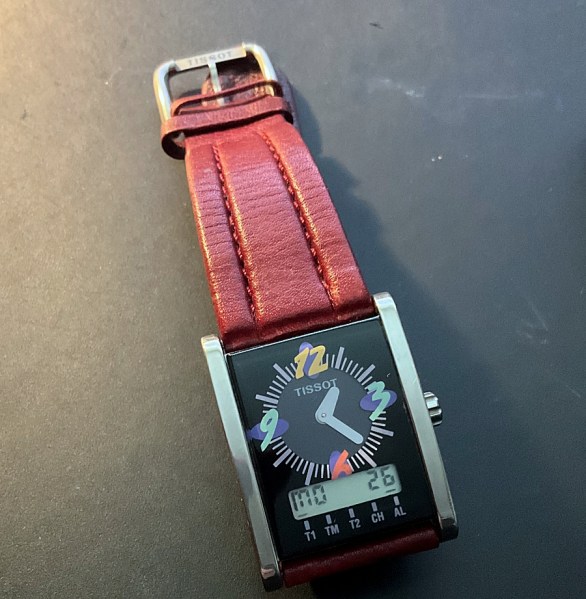
Interesting watch, the Tissot Two Timer (D.377) introduced by Tissot in 1986 and this one dated around that date.  By the number of different configurations, this Tissot model interestingly reflects both the Swatch ideals (Tissot joined Swatch as a founding member in 1983) and a competitor to the new Asian digital reality of the time, but in Swiss style.  In my small collection of these, I Post this one first as it’s quite a rare one, purely owing to it’s funky overlay dial.  The TTT (as I call them) models were relatively new tech for the time, as they were Ana-Digi models with an unusual feature of using just a single multi-functional crown.  The control module sets and adjusts the analogue time and the digital functions, which indicate in the single line digital display and by analogue hands.

Tissot Two Timer 1980’s Analogue/Digital Alarm/chrono (note – Alarm is shown as set)

The (adjustable) digital functions featured are; Digital Time, Seconds & Date, Weekday & Date (auto-calendar), Timer, 2nd Time Zone, Chronograph and, Alarm.  Each is selected and adjusted by the single crown, which is still today a bit of a rarity.  Analogue and digital can be synchronised too and the digital display can also be switched OFF.
I have just a few models that utilise single crown multifunctionality apart from the Two Timers.  One that immediately comes to mind is my 1999 Breitling Aerospace, which may well use the same or very similar module.  So, this very affordable 40 year old vintage watch, is in very good company.

As said this module uses a single crown adjustment system which although effective, is tricky to manage and if you’ve just bought the watch. You will need the instructions, believe me!

Basically there are 3 crown positions. Press the crown IN once (position A1 – spring action) it selects the main function changes and can also switch the Alarm on or off.  Crown position A (normal) rotates either way and moves the line marker under the digits to select the required function.
Position B – (one click OUT) is used to alter the digits on the function selected – then again rotate the crown in either direction. Note that a fast crown rotation moves hours and months & slow rotation alters minutes and days.

So, quite tricky to get the hang of. I found that slow is just that – a nice steady turn and fast is – fast!  I would say instructions should be to hand and perseverance is required – but the system does work, believe me.  The trouble is that next time you have to adjust it after replacing the battery, you will likely have forgotten what to do – so don’t lose the instructions!


Anyway, on this Two Timer, all functions operate flawlessly and the digital display is as good as it gets with no bleeding or fading, which is a real bonus on any vintage watch with a digital display (a weakness of early digitals).

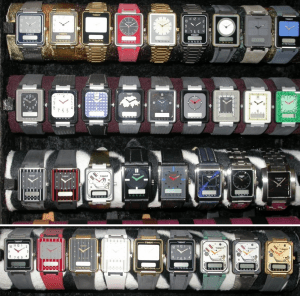
Image shows a Tissot Two Timers collection for sale in 2007

However, the main reason for my interest in this particular 1980’s – 1990’s Tissot Two Timer model is because of it’s rarity.

And this is totally owing to it’s colourful and rather funky overlay dial layout as it is VERY unusual.  A fact that’s very obvious by it’s absence in this great picture of a fabulous Tissot Two Timer collection offered for sale some years ago. Do I see this dial?  No.

Whilst I’ve also seen many variations on the theme with around 20 different 1st generation Two Timers up to maybe 1995, plus more variations with the 2nd generation models – I’ve only seen this particular one once before and as these pre-owned models change ownership every so often – who knows, maybe this is the one?

Update – I have actually seen one with this dial for sale in Singapore since I Posted this.

For anyone interested in Tissot Two Timer models, especially the 1st generation ones, there are a few (and just a few) of pre-owned ones around, mostly the more common dial layouts, such as the vertical striped face or skeleton. Though these tend to be the 2nd generation models which seem popular.  However, fully working 1st gen’s pre-owned ones are much more scarce.

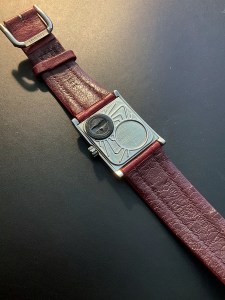
Note the small battery hatch – similar to Swatch – a 20 pence coin fits the slot.

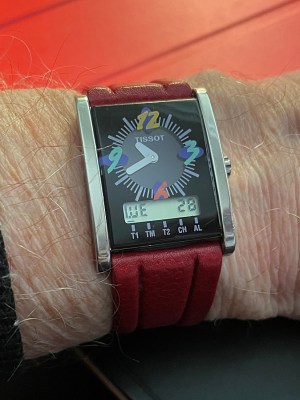
As said, this particular model is a rather colourful and quirky dial layout with thick white coloured (I call loony) hands plus an overlay of quite jazzy numerals and markers – I love its different look from the many others I’ve seen.  So I’m very pleased to have it. Plus, it has the original stitched leather strap as well and whilst obviously worn, it’s still OK to wear.  However, I do have another strap I obtained recently if and when this one gives up.  I note later versions have moved from leather to rubber options – which doesn’t do it for me I’m afraid

The watch is quartz powered (7 jewels) and the battery (SR920SW) is accessible via a battery hatch (note – 3ATM with the correct seal) on the rear (see image). And the all important crown is well knurled which makes it easier to turn for adjustments. Note the battery cover is often a plastic one and the slot is quite wide – I find here in the UK a 20 pence coin (7 sided) is perfect and prevents damage to the plastic. (don’t be tempted to get one without the battery cover – as these are very difficult to source).

Watch dimension are really good at around 28mm width (add crown just under 30mm) and the case thickness is very neat at around 7mm. The case is also curved with a flat back, so looks very neat on the wrist.

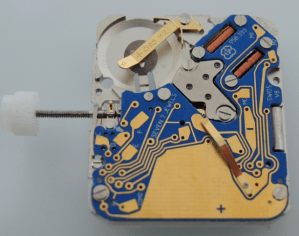
ETA 958-333 7 jewel module (available), but unknown if it would be a direct replacement.
My funky Two Timer on the wrist

So, as often the case, I find many vintage models preferable for all sorts of reasons – and fortunately, as said, they can still be found (but not always) at reasonable prices. Beware Two Timers for big prices – they shouldn’t be).

A little unsure as to the movement module used in this Two Timer, but it appears to be a variation of or similar to, the ETA 988.332 module in my Breitling Aerospace. Perhaps the ETA 958.300 series with a single digital window.

The module is part of the Swiss ETA Flatline series and information can be found online.  However, little information appears available after 2009 and although I have seen complete 958-333 modules, I would not assume these can be used as a replacement for this particular model.

A few other watch brands have utilised the ETA Flatline series of modules in addition to Breitling, such as Bell & Ross, Rado, Victorinox, Chrono and Butler, so obviously quite well regarded.

2 x Two Timers, same model, different year.
Strap, buckle and dial cosmetic change.

The Tissot Two Timer was never an expensive model, but it was in my view an important one as it not only competed, but matched Asian competition at that time.  Along with the introduction of the new Swatch Brand (Tissot being a founder member) this offered a proper well established quality Swiss Brand to customers at a crisis time in the European (Swiss watch) Industry.

So, to Tissot – Founded in 1853 in Le Locle in Switzerland, then allied to Omega – becoming the Omega Tissot Brand from around 1929. They further expanded with the amalgamation in 1983 of what was known as the SSIH-ASUAG & SMH (the Swiss names are too long winded for me to spell out) and finally SMH became a new Group known as the Swatch Group.  Today, of course a huge player in the watch industry, with a membership of many major and still independent Swiss Brands, such as Tissot themselves of course.

Anyway, that’s my funky Tissot Two Timer and I love it, both for it’s 1980’s modernist design and to my mind, under-stated place in the watch world and the fact that on the wrist, it just looks great! And I do prefer it to their previous ana/digi models which were not to the same standard.

I also show here in this image, another of my Tissot Two Timer models. This is another 1st gen D.377 model, not quite the same year, with another dial layout, strap and buckle and a different look.  Note – Later generation of the D. series have an altered case and lug design which necessitates a non-standard strap, often rubber. Also the battery hatch is no longer used, so the back is more conventional and uses screws to access the battery (maybe a better idea as often battery covers go missing).

Note 1 – Instructions are available here – https://www.manualslib.com/download/863198/Tissot-Twotimer.
And Here – which has a full set of instructions in .pdf format

Note 2 – Two Timer modules feature an auto-calendar, though this year (2024) being a leap year, with 29 days in February, I manually changed the date accordingly.

UPDATED – this Post was updated January 12th 2025