
Ever had a watch that’s been kept in a drawer full of metal tools for years? Well I came across two recently and these were as bad as I’ve seen. The cases were scratched, crystal/glass almost opaque and the watches generally pretty filthy. Now I could maybe understand this if these were owned by a jobbing builder and were just the result of concrete dust, walls proximity and heavy manual work – it happens – but these two were my Brothers and he worked behind a desk!
But, being a follower of watch auctions, this is not even unusual – some of the watches are awful.
So, seeing these were so bad, I decided to have a go at making both watch cases looking a little better, or that’s the plan at any rate! Now I’m not overconfident on this, but surely I can improve these somehow, without damaging them further. I mean, Hey, it’s hardly rocket science is it? Mind you, I have seen the results of a few attempts by friends to do just that – and being honest – I couldn’t see much difference after they finished! Anyway, I’m going to take it slow and see if I can at least improve and maybe reduce/remove some of these scratches. My advice however, is try it out on some old watch that is due for the bin anyway – just to be on the safe side!
I should say now that as I’ve just found these, I have not a photographic record of before and after – yet. . . . But if I manage even a little success, I hope to Post images at some point in the future. And what if I don’t, I hear some of you say? – well you can draw your own conclusions! Ha!
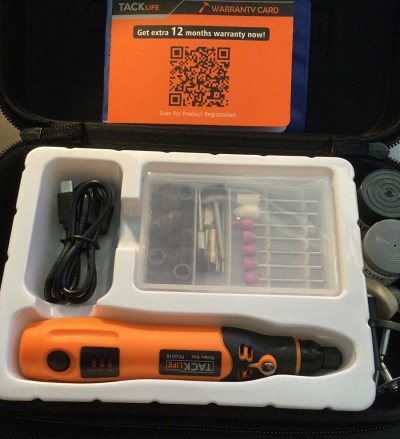
Of course to manage anything you need to have some tools and although you can do some work without, it’s really fiddly just with fingers.
So, I checked around the Internet and found the Tacklife 3.7v cordless Rotary tool (so much easier to use without a cable getting in the way), so no cable and the tool is only around 6″ long, quite thin, light weight and really easy to use. I used to have a Dremel some years back, as it was all the rage when it came out – but I was never impressed that much and found it clumsy – the cable being too stiff and just got in the way – but this new tool is really neat.
This comes in it’s own little box with an assortment of bits and things that do most anything I want. I like the fact, it has two (2) changeable bit holders – their own one which is small and one that fits standard Dremel bits – so really useful when looking for tool bits. The tool seems powerful enough for purpose and has 3 speeds from 5,000 to 15,000 rpm and has enough bits for anything you might throw at it.
Being so keen to try it out, right out of the box, I just took one of the scratched watches in my left hand and the tool in my right and started using it. (how amateur is that?). Now OK, if I wanted to get serious then I’d probably either clamp the watch or the tool and be a bit more professional and as it happens, taken a bit more care!
Now to be ultra cautious, I’m starting by using a small buff plus a little of the included grinding/polishing compound, basically as it incorporates a fairly gentle abrasive and is about as non-invasive as you can get.
Simply select the speed setting for you and have a go on the scratched stainless surface of the watch case and you should start to see results. It only took me around a minute or so on each of the upper and side surfaces. I hadn’t even removed the watch strap (which, of course, you should do, as the polish compound won’t do it much good), but in my eagerness I thought I’ll just give it a few goes and see what happens. And in the event after a few minutes the improvement was actually obvious. After a few more tries I upped the speed a bit as I grew more confident, but whatever suits your hand skills.
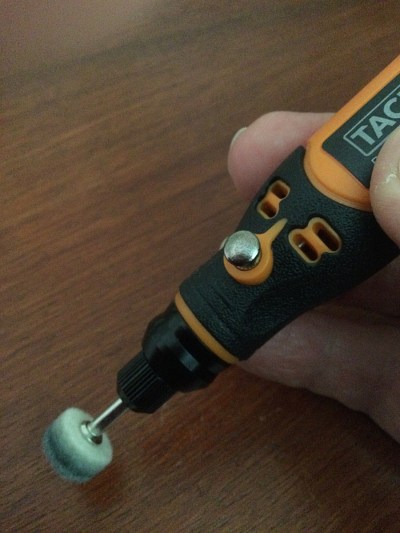
Now I know to remove deeper scratches on stainless steel it’s probably better to BE bold – but with care on the edges and corners of course – and can certainly give decent results.
You then start from a new sheet or surface as it were and use finer grades of abrasion each time and then polishing compounds to get to that mirror scratch free finish you are seeking. BUT – I’m starting out here from scratch (excuse the pun). So softly softly . . .
I can also decide how far I want to go and maybe say – OK that’s a big improvement, I don’t need to do any more – OR once I’ve had a bit more experience I’ll go the whole way, but that’s a decision I’ll leave for now. OR, horror of horrors, say – Jeez this is worse than I thought – and well I never liked that watch anyway – and bin it!
But after just 2 minutes of Tacklife use as a first phase it’s improved the look already.
So, it seems obvious that with this kit and other abrasive compounds and surface bits, there is little that can’t be achieved with this simple set up and stainless watch cases should present no problems at all.
For Gold cases however before I started I’d definitely read up on it from someone who knows that they are doing. You certainly don’t want to remove too much Gold. Bad enough with solid Gold, but for Gold plate, then less is more, as they say, plus a bit of common sense.
Fortunately, I have very few watches that have a scratch problem, but the odd one that does find its way into my collections, I can fairly confidently look forward to at least improving these to my satisfaction enough that I’m happy to wear it.
This is not the first time I managed a case clean-up, as I did one well over a year ago from my Wife’s watch box (what does she do with them!) And this was long before I’d even thought of a Post like this and unfortunately, I didn’t think of photos at the time, so no photo was taken “before” I started. But I’m happy to report the watch looks pretty decent now and my Wife is happy enough to wear it – so I think it’s passed inspection!
But as always – watch this space.
Note – I hasten to say that I’ve no vested tie up or commercial connection to the rotary tool used – it just happened to be the one I picked at random on the Net, that seemed on description to maybe be ideal for my purpose. The fact that it worked out OK for me, was and is a bonus.
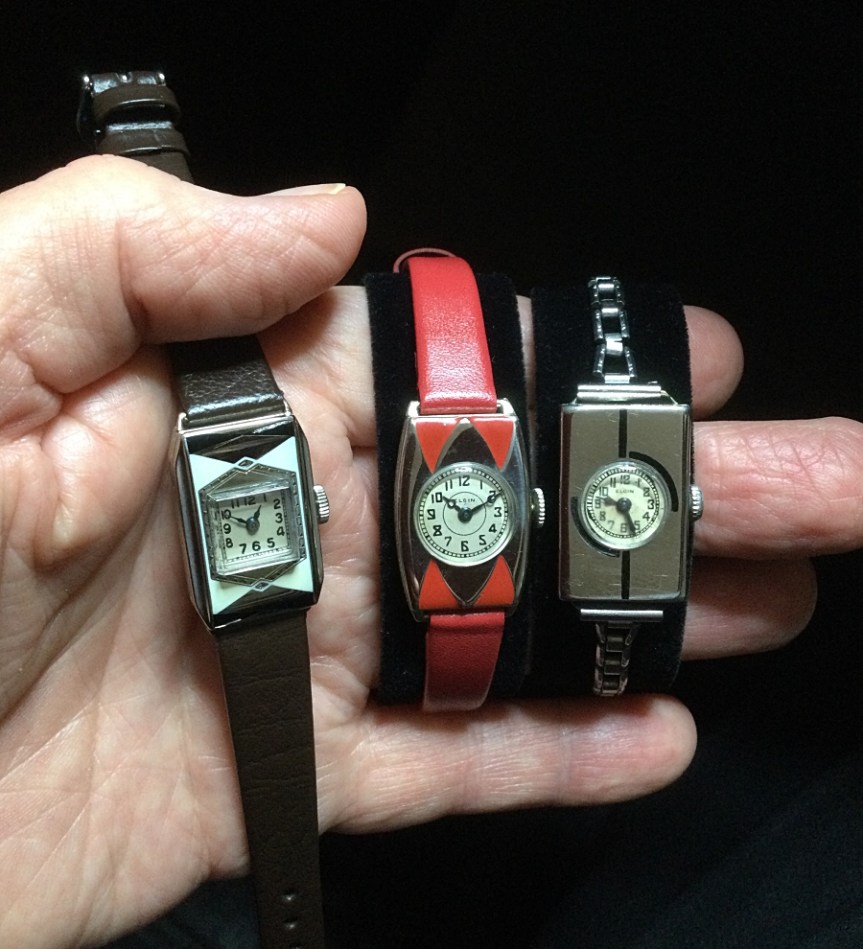
 Watch space
You must be logged in to post a comment.