
This week for a change I feature a rather interesting Seiko quartz watch from the ’80’s. The Seiko AGS or Automatic Generating System Model 7M22-6A40 gents watch first appeared in 1988 and was an early automatic quartz forerunner of what’s better known now as the “Kinetic” series. It was first pioneered by Seiko in 1986 as AGM and further altered to AGS when this watch came out.

This 1988 April version has a nice white dial with Roman numerals, black coated hour and minute hands with a central gold coloured seconds sweep. A date window – black against white @6 completes the neat easily read dial and a good “Hardlex” crystal to the front. The date features a quick set on the first click of the crown. Finished in satin gold plate with matching gold coloured bracelet it looks very neat indeed. The bracelet which is very smooth to wear can accommodate up to around a 7.75″ wrist.

This particular watch shown here was a brand new Old Stock model when I got it recently and has been in storage lying dormant for over 20 years and is in absolute pristine as new condition.
So how does it work?
It works using a rotating pendulum rotor in similar fashion to the rotor in a mechanical automatic watch which is attached to a larger gear which meshes with a very small pinion. It operates on the wrist movement of the wearer and rotates via a 1/100 gearing pinion, transferring energy to a power-generator at high speed to produce an electrical current which in turn charges a capacitor (KESU) which in turn feeds the time circuits. Being one of the earliest models with a 3029110 power capacitor the full charge might last maybe 3 days or 75 hours – however, full charge takes about 800 swings of the rotor, so really has to be worn a lot to get the best capacity reserve out of it.
A feature of this early model is that the second hand operates in 2 second jumps, if the power reserve capacity drops to around 3 hours. Now, as it can take a considerable wear time and wrist movement to build up a sufficient charge, it can sometimes seem as if 2 second jumps are normal! In fact I know of a few owners who thought that was normal!
All is not lost however, as in 1990 owing to charging issues with the older capacitors, they were replaced by the newer 3023 24R capacitor (KESU) module which dramatically improved both the reliability and allowed a whopping 90 days on full charge – much better – and the 2 second warning was not in evidence.
This particular model features a 5 jewel all metal 7M22A movement, which is all metal and before plastic parts is actually better than some modern watches.
The dimension of this watch is very compact for an AGS or Kinetic watch and measures 40mm top to bottom and side to side (without crown) just 35mm. Back to front is just 9.5mm and with a 28mm diameter crystal. Quite neat and unobtrusive and quite dressy and I have to say it looks very good on the wrist.

In this image you can see both the rotor and the capacitor, which is a Panasonic MT920 (2.4v) at the left. The watch serial number follows the Seiko numbering system with first digit 8 denoting 1998 and the 4 for April. The next 4 digits represent the model number in that month. Quite useful to see such an unusual and Seiko historic movement mechanism and note the cal. number etc. You can also hear the rotor operating though once against the wrist it’s almost inaudible.
So an unusual model and factually a milestone in Seiko watch terms. This one is in fantastic condition even after just over 20 years since it first came out.
I suppose if I was honest that capacity charging efficiency was low with this original concept. In fact the 2 second jumps can appear all too easily, especially if you take the watch off at night, or if you wear your watches in rotation and leave it in the watch display box for a month. It just takes far too long to get it up and running at full tick, as it were.
But it CAN be changed and upgraded fairly easily and I have the newer replacement capacitor ready to fit.
Anyway not withstanding the above – it’s still an intriguing and to my mind, a historically significant watch and a nice addition to my collection.
February 2015 – update – I changed the capacitor. (however, after 10 years I replaced it as it barely functioned).
So, today I have updated and edited the previous report as follows –
June 18th 2025 – I have just now replaced the power unit with a new 3023 24R which is a direct fit.

Note, it’s a bit misleading when you look at the previously installed capacitor via the exhibition glass back, as the visible top part (negative) of the capacitor is of smaller diameter than the positive side (see image).
Important note – when removing the new capacitor from it’s small blister pack, do not touch it with your fingers, either use nitrile gloves or similar or plastic tweezers. Also don’t be tempted to check it with a voltmeter as this could cause issues.
Anyway, my procedure – I removed the screw case back. Once inside, you can optionally removed the rotor for easier access, or continue as I have without. I found last time it was possible and I’m always wary when re-tightening any rotor screw.
The capacitor is recessed and before you can take it out you have to remove two small screws holding the top plate surround. Using tweezers take off the top plate and underneath there is a small brown insulator gasket. Carefully lift it off from it’s tiny locating points. Take note – don’t pull it, as it is located under the spot welded yellow metal capacitor plate on the left side, but above the wider plate on the right.
However, as I always do, prior to working on it, I take close up pictures of the whole thing in situ, so I can refer to them if I get the orientation wrong.
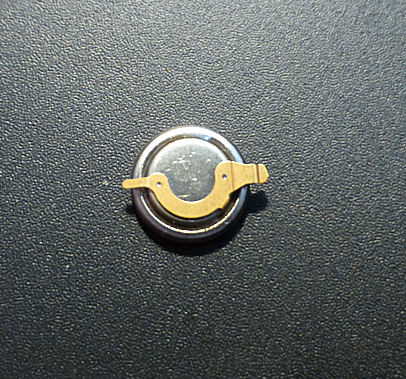
Fitting the new one is the reverse of the process and once all done up again, in my case, it immediately started. With full tick. Once fully charged it should get at least 30 days and perhaps 60 days as the 90 days quoted may be over optimistic.
(NOTE – if you have removed the rotor, do make sure you screw the rotor back carefully – tight enough to hold, but not too tight – if slack, the rotor is ineffective).
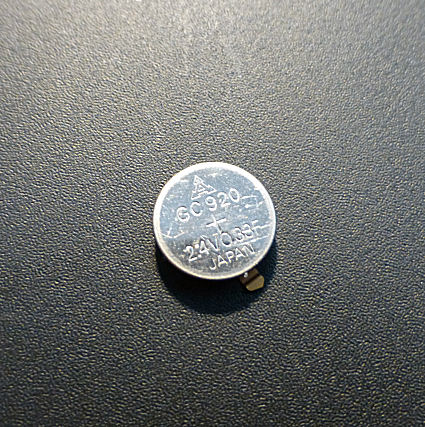
AGS is called Kinetics now and the science has moved on somewhat since 1986 and whilst Seiko had a Kinetic collection, this was ended in 2020.
However, I believe kinetic might still be available in their Premier range, though I have heard that as of May this year 2025, these may also be discontinued.
It seems that Spring Drive has replaced the whole kinetic idea – check Seiko main web site for details.
As ever – things move on . . . . .
 Watch space
You must be logged in to post a comment.